

The briefing · Vol. 08 · No. 003
1 September 2026 · In-space economy · Policy & capital · Connectivity · Earth observation · 8 min read
Where volume actually lives
A $100 billion Starship site on the Louisiana coast. Tracking sats on a 2028 clock. A $1.5 billion Firefly book. Terminals you cannot rip out. Arrays ahead of coverage. HawkEye RF out of eval. The mine still needs power and a working face.

What this issue is actually about
Awards are not volume. Volume is a site, a plant, a book that converts, hardware that is expensive to tear out, and a machine that can keep working when nobody is standing over it. This issue is those layers.
Launch
Starbase Louisiana: the volume site

SpaceX has announced Starbase, Louisiana: a new Starship launch complex on the southern Louisiana coast, near Pecan Island in Vermilion Parish. The company and state officials describe a project on the order of $100 billion across more than 100,000 acres.
The site is designed for volume: thousands of Starship flights a year at full build-out. Plans include multiple launch complexes, on-site propellant production, power generation, vehicle processing, deep-water shipping, an airport, and housing. Construction is targeted to begin in 2027. A first launch is aimed as early as 2029. Permanent jobs are described in the thousands, with room to grow.
Starbase Texas stays the development and test center. Louisiana is the volume site, where launch stops being exceptional and becomes output. That is the industrial statement. SpaceX is no longer planning Starship around one primary coast.
The stack matches the rest of the company: not just pads, but propellant, power, logistics, and workforce in one place. Whether the full volume shows up will depend on permits, construction, and the vehicle. The announcement is the claim. The land is the bet.
Tracking
SDA puts $1.75B on L3Harris and Sierra Space for AMDT3
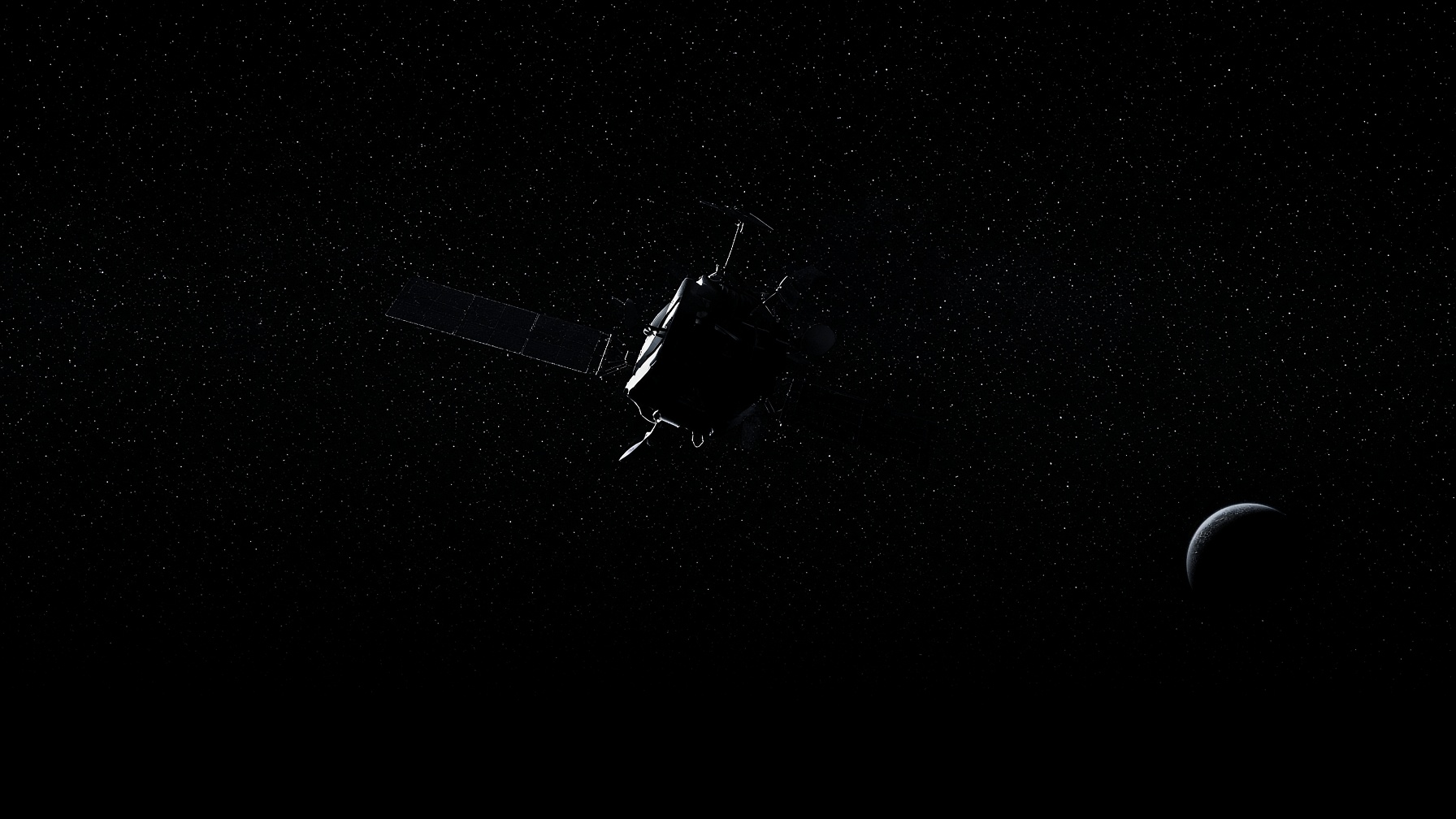
The Space Development Agency awarded about $1.75 billion in fixed-price OTAs for Accelerated Missile Defense Tranche 3: $955 million to L3Harris for 18 missile-defense variants and $798 million to Sierra Space for 18 missile warning and tracking variants. Thirty-six vehicles. Four orbital planes. Ready for launch by the end of 2028.
This is an add-on to Tranche 3, not a replacement. SDA already had roughly $3.5 billion on 72 Tracking Layer satellites from L3Harris, Lockheed Martin, Northrop Grumman, and Rocket Lab, with those birds aimed at 2029. AMDT3 pulls a slice of the layer forward a year and grows the tranche toward 104 spacecraft.
L3Harris is building HBTSS-like missile-defense sensors. Sierra Space is building the warning and tracking variants. Both have to talk to the rest of the Proliferated Warfighter Space Architecture through a common ground system. Last Friday L3Harris had the Space Force in the Fort Wayne plant that is supposed to produce the work.
The dollars are the point. Two primes, a 2028 clock, and a second commercial name (Sierra) on the accelerated slice. Tracking at this volume is a factory problem.
Backlog
Firefly: $117.7M quarter, $1.5B book
Firefly Aerospace booked $117.7 million in second-quarter revenue, up 659 percent from a year earlier, and closed June with about $1.5 billion in backlog. Full-year guidance stays $420–450 million. Spacecraft solutions did most of the quarter.
The book is mixed on purpose: NASA CLPS lunar work, a Lockheed Martin multi-launch extension through 2031 for up to 25 Alpha Block II flights, and defense software through SciTec, including a $94 million Space Force radar-digitization award. Firefly also bought Space-ng for vision navigation on landers and tugs.
That mix is the tell. Firefly is trying to stop being a small-launch story and become a spacecraft-and-defense contractor that also flies rockets. Almost all of the remaining 2026 revenue guide was already under contract by the earnings call. The constraint is conversion and production, not demand.
Losses are still large. Liquidity after the June equity raise is not the emergency. The test is whether Alpha, Blue Ghost, and Elytra can turn a $1.5 billion book into repeatable output without slipping the guide.
Connectivity
Starshield is lock-in
The Space Force awarded SpaceX a sole-source task order for worldwide Starshield connectivity on military aircraft already fitted with Tile and Tile Mini terminals. Service spec is 500-plus Mbps down and 100-plus Mbps up. Base period runs through July 2027, with an option through July 2028. The dollar value of the task order was redacted.
The justification is the lock-in. About $51.9 million has already gone into developing and qualifying the terminals. Switching providers would mean new hardware, aircraft integration, cybersecurity work, qualification, and retraining. That path is estimated at two and a half to three years and about $72 million in replacement gear.
That is why the award did not go out for fair opportunity. Once the terminals are installed and qualified across a fleet, the network underneath them stops being a pilot and becomes infrastructure. Starlink built the constellation. Starshield is the version that gets treated as hard to rip out.
Connectivity
AST SpaceMobile: production ahead of coverage
AST SpaceMobile now has 13 BlueBird satellites on orbit after BlueBirds 11–13 reached space in early August. The company says BlueBird 14 is complete, 15 and 16 are close behind, and production is advancing through the forties, far enough to cover continuous service in key markets if the launch cadence holds.
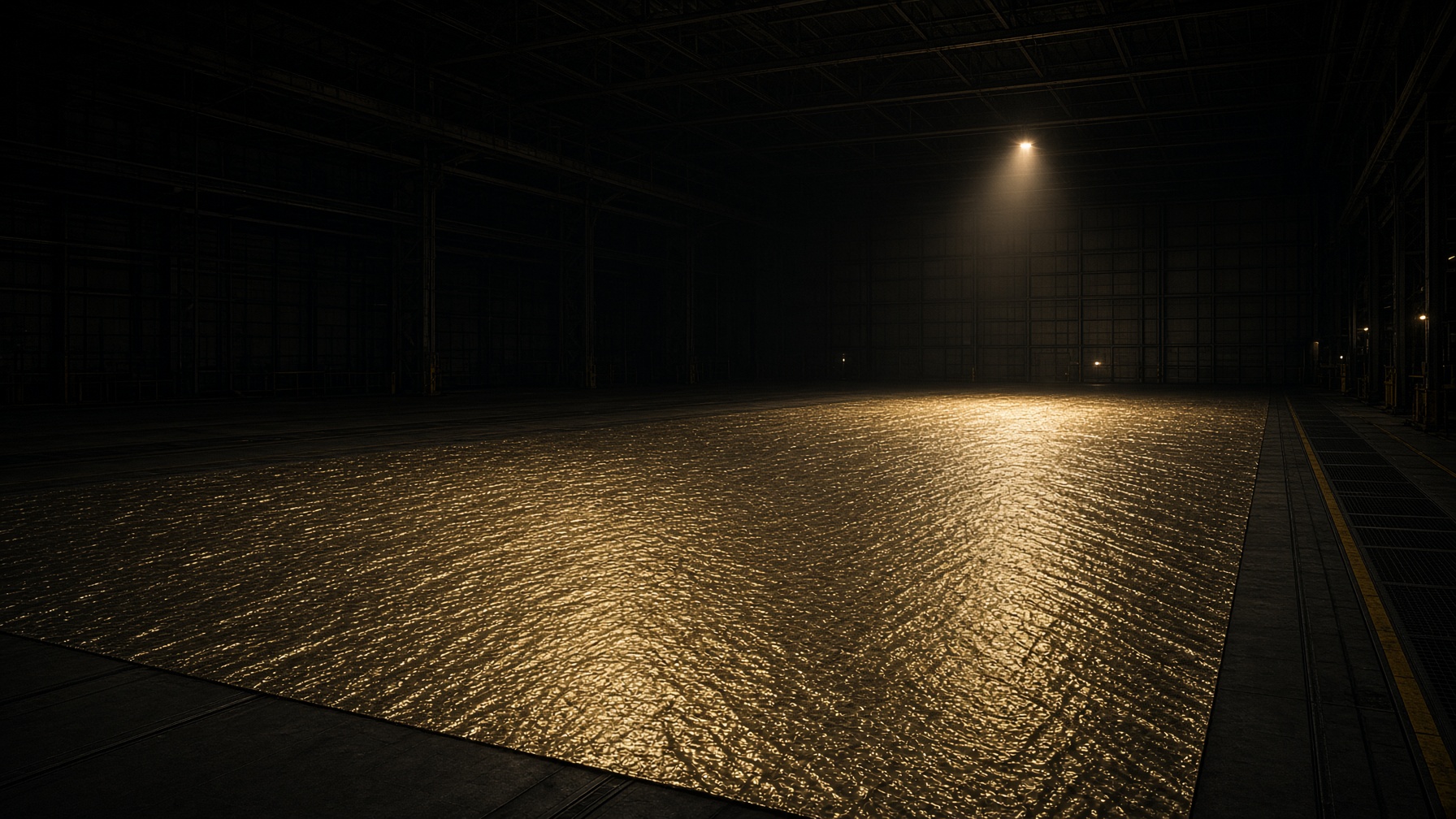
The industrial tell is the factory, not the press photo. AST says it can build up to six BlueBirds a month. Block 2 arrays are about 2,400 square feet. The company lists roughly 60 mobile-network partners covering more than 3 billion subscribers and is holding 2026 revenue guidance of $150–200 million.
The ~45-satellite target slipped from year-end 2026 into early 2027. That slip matters. Direct-to-device only becomes a business when coverage is continuous, not when a handful of very large satellites are in the sky. Production through the mid-forties is the attempt to close that gap.
This is connectivity as manufacturing: arrays, Midland, Falcon 9 slots, and a carrier book. The constellation is still short of the coverage goal. The line is now whether the factory stays ahead of the launches.
Earth observation
HawkEye 360 moves from eval to operational NRO work
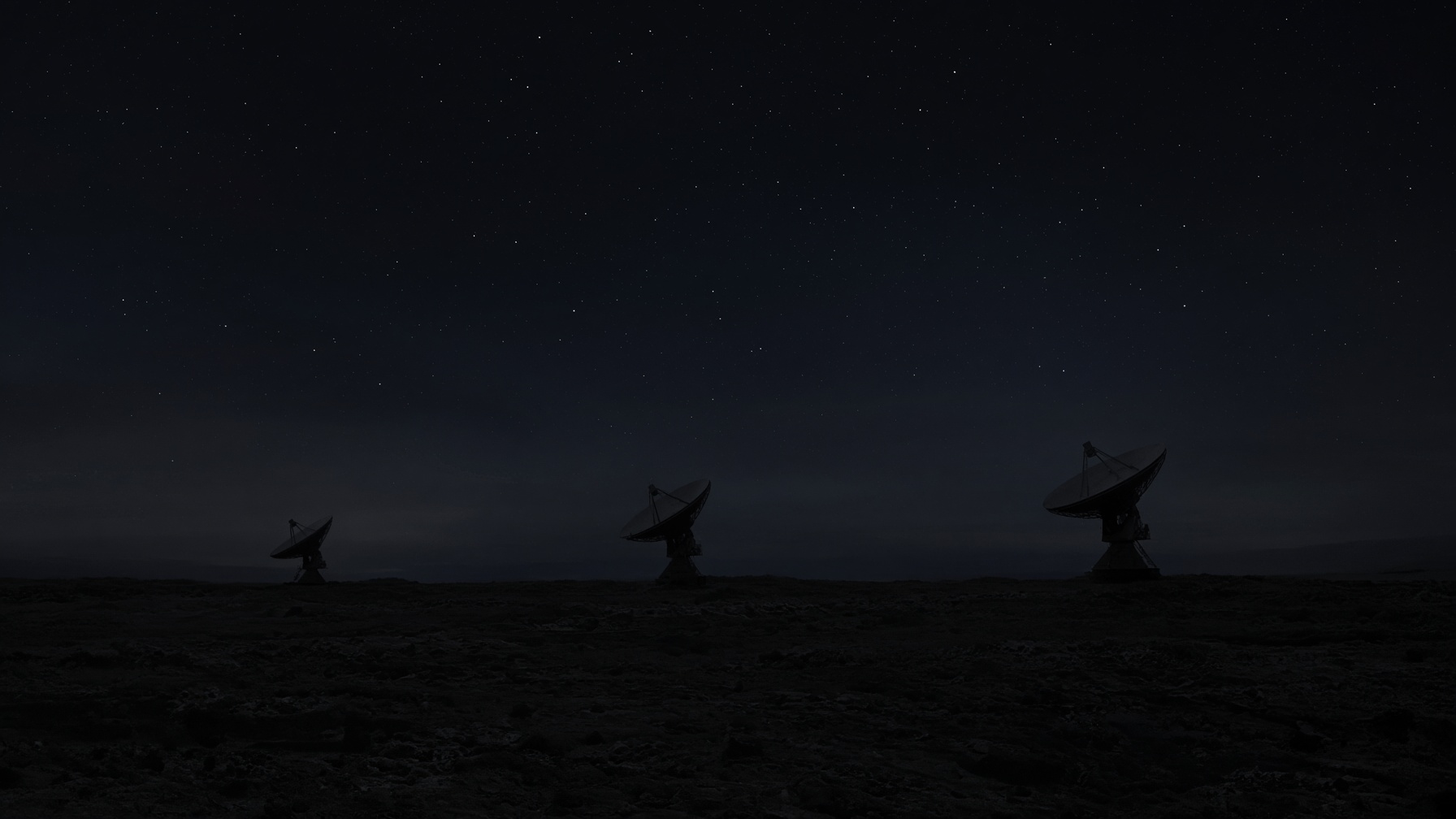
The National Reconnaissance Office awarded HawkEye 360 a Commercial Radio Frequency Capabilities Augmentation contract, moving the company from a multi-year evaluation into operational support. Contract value was not disclosed.
HawkEye flies clusters of small satellites that listen for emitters (radars, comms, ships) and locate the source by measuring the same signal from more than one bird. Optical imagers take a picture. RF satellites take a bearing. The NRO spent three BAA phases testing whether that commercial feed was good enough to sit next to government systems. HawkEye cleared the phases. CRFCA is the production seat.
The company reported a $292 million backlog and $21 million in second-quarter international revenue, up 134 percent and about 42 percent of the quarter. Those numbers matter because the NRO award is the U.S. operational stamp, not the whole book. Commercial RF is already a product with foreign buyers.
Value undisclosed is not a hole in the story. The tell is status: first commercial RF provider the NRO has moved from test-and-eval into an operational augmentation contract. The data is in the workflow now.
In-space economy
Mining 3 of 6: Power, robots, the first working face
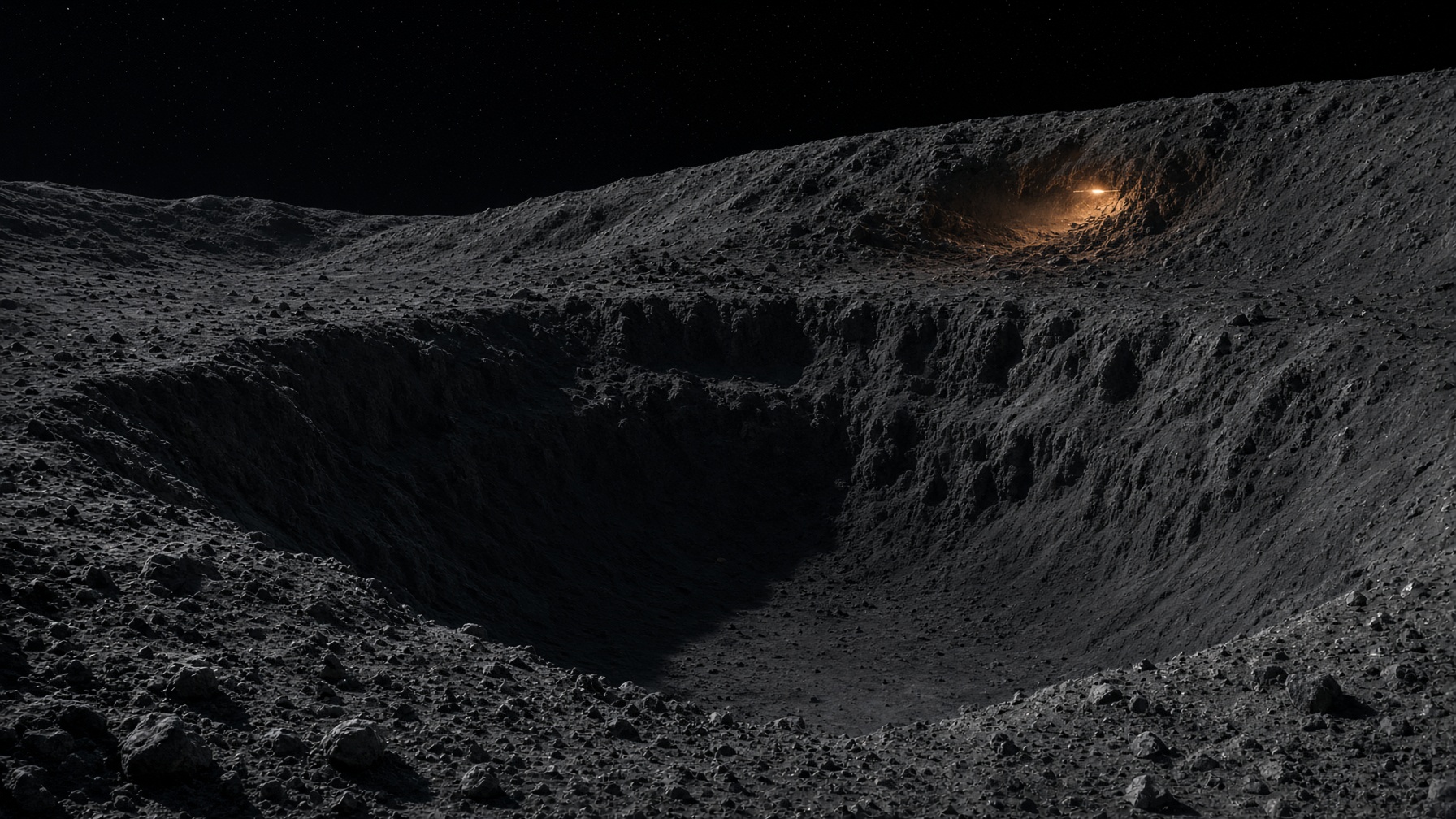
Water and oxygen are the first useful products. They do not mine themselves.
The next constraint is the working face: a machine that can dig, sort, and feed a plant without a crew standing over it, and a power system that does not quit when the sun drops or a crater wall takes the light. Off-planet mining starts as robotics and power. Everything else (mineral rights, Earth prices, the belt) waits on that.
What has to exist on the face is dull and specific. A digger that does not jam on unknown regolith. A sorter that can tell ice from junk without a lab. A plant that runs through a two-week lunar night or a long eclipse. Nuclear if the site is dark, solar-plus-storage if it is not. A hopper or haul loop that moves feedstock a few hundred meters to a plant. None of that is a press kit. It is the same stack a remote mine uses on Earth, rebuilt for vacuum, dust, and delay.
That is why the robotics bucket belongs here and not as a separate gadget beat. Optimus-class humanoids are a headline. The mine wants cheaper, dumber, specialized machines that can fail and be replaced. Surveyors first. Then samplers. Then excavators. The paper architecture is already written: sense the target, sample it, then cut at scale. The gap is doing it without a standing army of operators.
Power is the other half. A plant that makes oxygen from regolith is an energy hog. A plant that melts ice and electrolyzes water is an energy hog. If the power dies, the mine dies. The first serious face will be the site that can keep kilowatts up through the dark. Until that is true, asteroid platinum is a slide.
Part 4 is where. This part is how the hole gets cut.
End of issue 003
If this was useful, the next one lands Monday.