

The briefing · Vol. 02 · No. 002
25 August 2026 · Policy & capital · 8 min read
What scale actually requires
SpaceX stands up a gas desk. Starcloud and Muon raise at compute- and factory-scale. Rocket Lab and Intuitive Machines take spacecraft production. The Space Force splits AMTI. The first useful mine products are water and oxygen.

What this issue is actually about
This week is about the inputs. Propellant and power get a trading book. Compute and buses get factories. The Pentagon buys a second source. Mining, if it is real, starts with water and oxygen — not platinum.
Energy
SpaceX stands up a natural-gas trading desk

SpaceX is hiring a natural-gas trader to build an in-house trading desk. Starship’s liquid methane demand and Starlink’s expanding power requirements have reached the point where energy is a strategic commodity exposure, not just a cost line.
Airlines have hedged jet fuel for decades. SpaceX is now applying the same logic to methane propellant and the electricity required to operate a growing satellite constellation and ground infrastructure. The desk will manage natural-gas exposure tied directly to launch cadence and satellite operations.
This is an industrial threshold. When a launch and satellite company begins treating propellant and power the way a major airline treats fuel, the operation has crossed from experimental into continuous large-scale production. It also signals that expected Starship flight rates and Starlink power draw are high enough that price volatility is becoming a material business risk.
The move fits the broader pattern of vertical integration that now reaches into the energy markets themselves. SpaceX is no longer only building rockets and satellites; it is managing the commodity inputs required to fly and power them at the volumes the company is targeting.
Capital
Starcloud adds $250 million at a $2.3 billion valuation

Starcloud, the startup building satellites designed to run AI inference in orbit, added $250 million to its March Series A. The round now totals $420 million and values the company at $2.3 billion.
The capital is aimed at orbital data-center capability — satellites that process data in space rather than downlinking everything to Earth. Launch constraints and the cost of moving large volumes of data have made on-orbit compute a practical target. Starcloud is one of the clearer bets on that architecture.
The size of the round and the valuation place it among the better-funded pure-play attempts to turn space into a compute layer rather than only a communications or sensing layer. Flight results will determine whether the physics and economics work at scale. The funding itself is a concrete signal that investors are willing to underwrite the attempt at this level.
Industrial mix
Rocket Lab Flatellites and the continuing Space Force stack
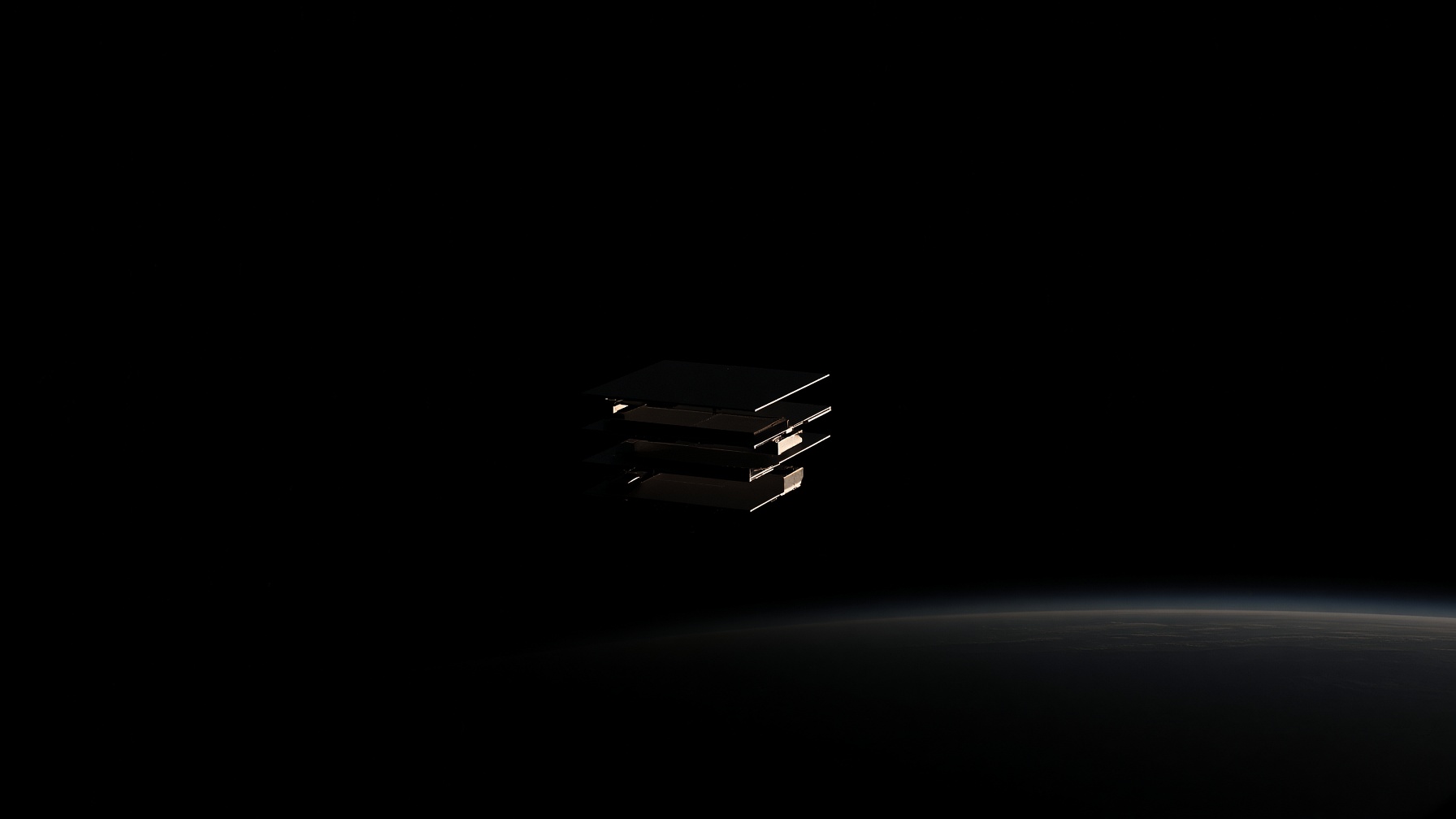
Rocket Lab continues to convert national-security demand into multi-orbit spacecraft and launch work. The $397 million Space Force award to develop, launch, and operate Flatellites under the Space-Based Airborne Moving Target Indicator program sits on top of the earlier $266 million HASTE Alaska suborbital contract, delivery orders inside the Space Data Network consortium, and onboarding to the $981 million NITE-STAR test-and-training vehicle.
The Flatellite design is optimized for large constellations and stackable deployment. Combined with Electron cadence and the coming Neutron vehicle, Rocket Lab is stacking responsive launch, satellite production, and test support under one roof.
The pattern matches what both the Pentagon and commercial customers are buying: suppliers who can deliver hardware at volume on compressed timelines. Rocket Lab’s reported backlog has climbed past $2.3 billion. The company is no longer only a small-launch provider; it is becoming a multi-orbit systems supplier inside the national-security industrial base.
Contracts
Intuitive Machines takes a $600 million-plus communications program
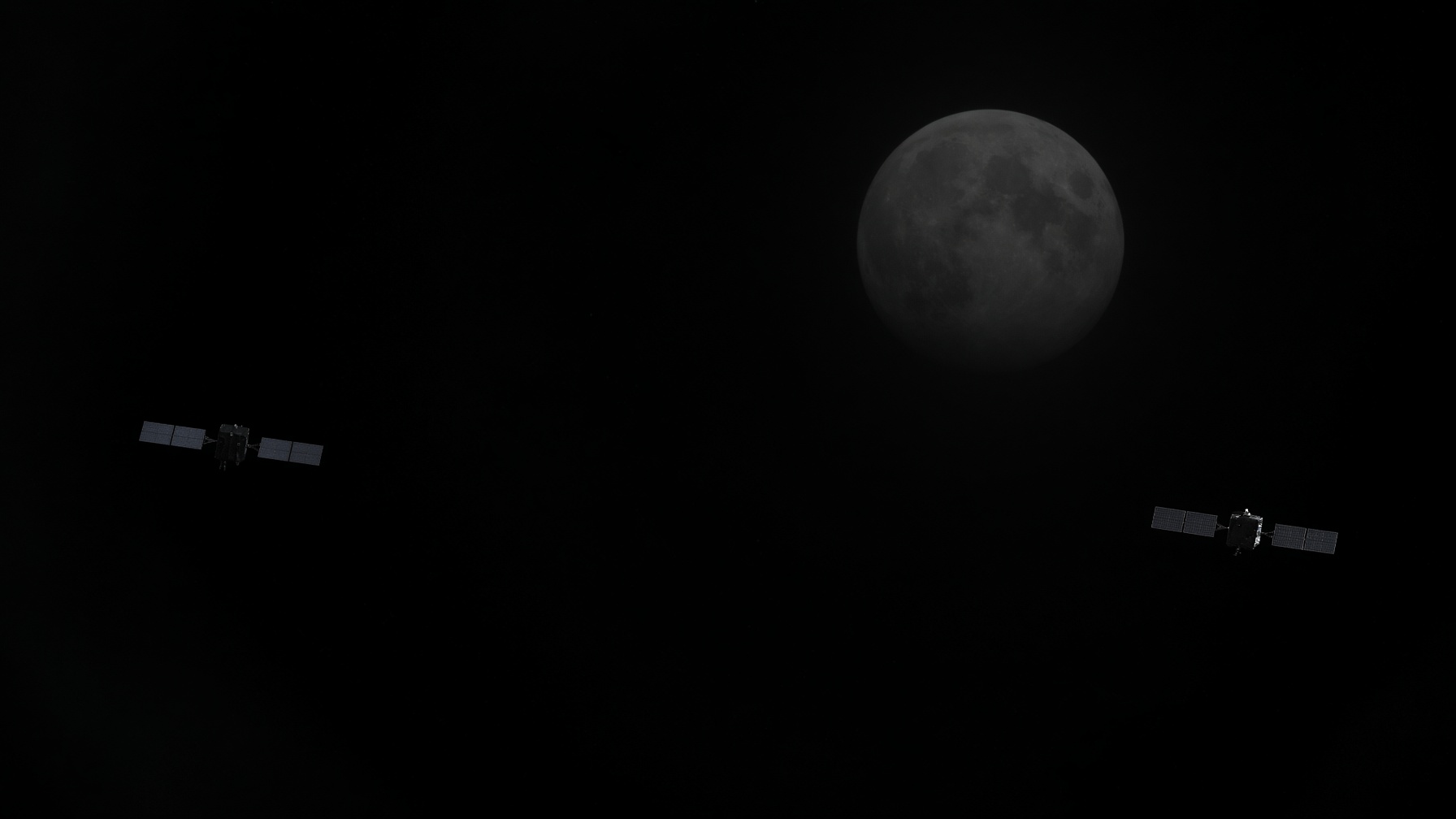
Intuitive Machines received authorization to proceed on a multi-satellite communications infrastructure program with an anticipated value exceeding $600 million. The company will design, manufacture, integrate, and support multiple spacecraft using its IM-1300 platform for an undisclosed customer.
The award marks a clear expansion beyond lunar delivery into communications spacecraft manufacturing. Intuitive Machines has already demonstrated lander capability under NASA’s CLPS program. This contract moves the same industrial base into higher-volume, multi-satellite production.
For a company still closely associated with lunar surface missions, a $600 million-plus communications order is a second growth engine. It also reflects the broader market reality that demand for resilient satellite communications continues to pull new manufacturers into production roles once they have proven basic spacecraft competence.
Capital
Muon Space raises $250 million and plans factory scale
Muon Space raised $250 million in a Series C that included Google and Salesforce among the backers, at a reported valuation around $1.5 billion. The company is building a new manufacturing facility designed to produce hundreds of satellites per year and states that its order pipeline exceeds $10 billion from government and commercial customers.
The combination of fresh capital and explicit factory-scale targets is the signal. Satellite manufacturing is moving from craft production toward industrial cadence. Muon is one of the clearer attempts to match the production volumes that proliferated architectures now require.
Whether the pipeline converts at the stated scale will be tested in the coming years. The raise and the factory plan show that both capital and customers are treating high-rate satellite production as an achievable near-term goal.
Industrial base
Space Force diversifies AMTI away from sole-source SpaceX

After awarding SpaceX a $4.16 billion contract for the Space-Based Airborne Moving Target Indicator program, the Space Force issued a second tranche of task orders totaling $615 million to three additional companies: Rocket Lab ($397 million), STR, and one firm left unnamed for operational security.
The explicit rationale was diversification. Officials stated they do not want to rely on a single technical solution. The second tranche is a fraction of the SpaceX award, but it establishes parallel paths and keeps competition inside the industrial base.
The move sits inside a larger pattern. The Space Force has placed multi-billion-dollar bets on commercial providers for sensing, data transport, and launch while simultaneously opening second-source work. The $4.16 billion SpaceX award was followed by $1.6 billion in Falcon 9 launch task orders. The $615 million follow-on is the deliberate counterweight.
Rocket Lab’s portion continues its rapid conversion of national-security demand into multi-orbit spacecraft production. For the industrial base the signal is clear: large primary awards plus deliberate second-source work is the practical definition of a market that is scaling rather than consolidating around one supplier.
Resources
Mining series, part 2: the first useful products are not platinum
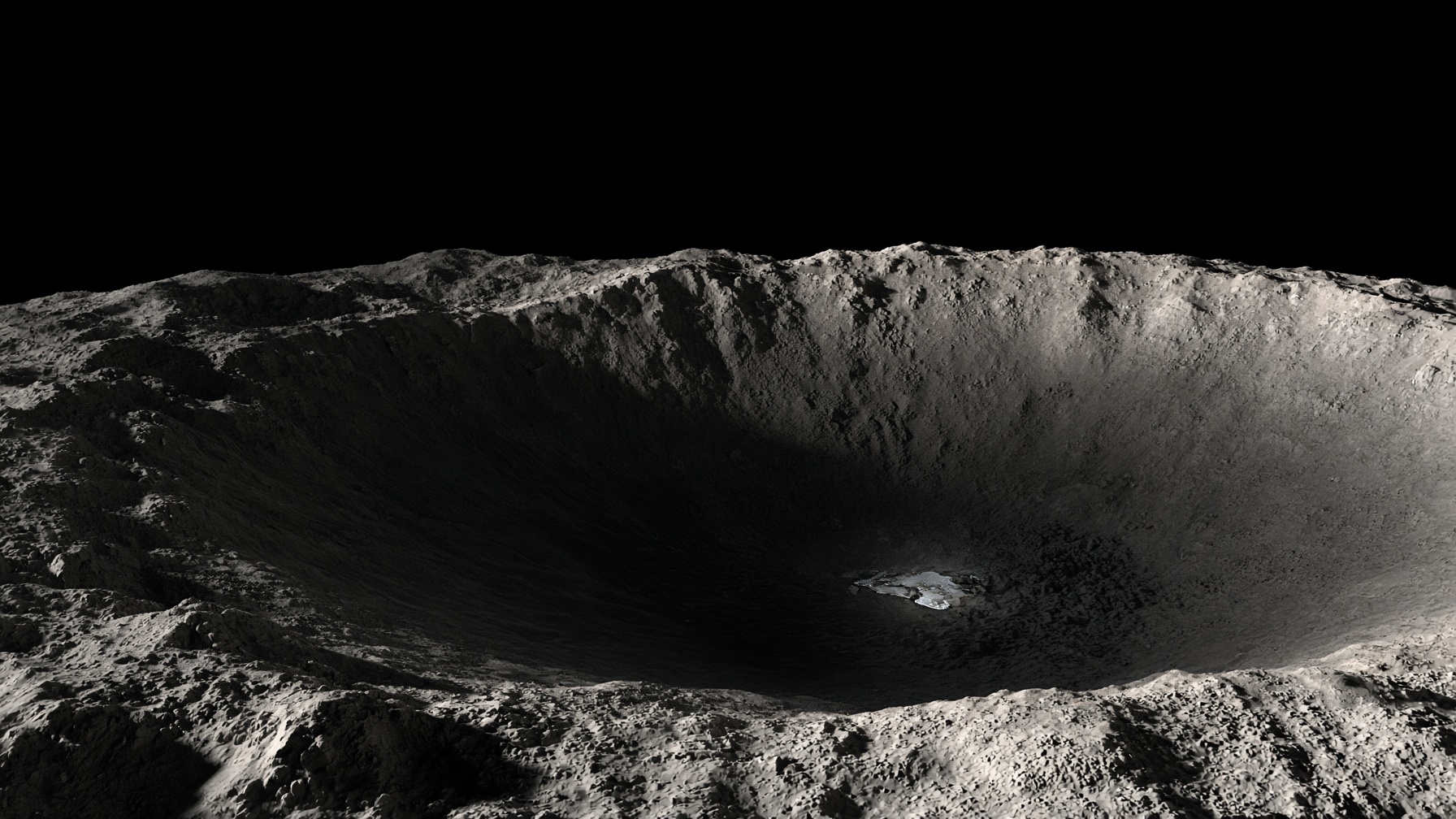
The popular version of space mining begins with a metallic asteroid worth trillions and ends with precious metals returning to Earth. That sequence is still decades away from economic reality. The products that actually matter first are far less glamorous: water, oxygen, and propellant.
Sustained surface operations — whether on the Moon or later on Mars — require the ability to produce breathable air, drinking water, and rocket propellant without hauling every kilogram up from Earth. Lunar polar ice and oxygen-bearing regolith are the nearest resources that can support those needs. Recent technical work continues to treat them as the near-term priority.
NASA and commercial partners have advanced several extraction pathways. Molten regolith electrolysis can liberate oxygen from lunar soil while leaving metal-rich slag that can later feed in-space manufacturing. Solar-driven chemical processes and hydrogen or methane reduction routes are also under active maturation. Blue Origin’s Blue Alchemist effort remains one of the more integrated commercial demonstrations, aiming to produce oxygen, silicon, iron, and aluminum from regolith simulants under lunar-relevant conditions.
System-level modeling reinforces the same hierarchy. Studies that size complete ISRU architectures for potable water and oxygen production show that mass, power, and thermal management are dominated by the need to operate through the lunar night and by the actual water content of the local regolith. A 10 percent drop in either available water or solar visibility produces outsized increases in overall system mass. “Survive the night” power architectures are therefore not secondary features; they are design drivers.
Every kilogram of propellant made locally is a kilogram that does not have to be launched from Earth.
Propellant production follows the same logic. Oxygen and hydrogen (or methane) manufactured on the surface change the economics of both lunar landers and any eventual transportation architecture that must climb out of a gravity well.
Platinum-group metals and helium-3 remain interesting long-term targets, but they sit further down the sequence. Concentrations are low, extraction energy is high, and the terrestrial markets, while high-priced, are still limited. Water, oxygen, and propellant solve immediate operational problems and create the first closed-loop logistics that make everything else possible.
The practical roadmap is therefore clear. Prospecting must identify accessible deposits. Extraction systems must demonstrate continuous operation under real thermal and power constraints. Only after those steps does bulk return of high-value materials become a realistic commercial conversation. The industry is still in the first half of that sequence. The companies and programs that treat water and oxygen as the primary products are the ones aligned with the physics and the economics of the next decade.
End of issue 002
If this was useful, the next one lands Tuesday.