

The briefing · Vol. 08 · No. 008
5 October 2026 · In-space economy · Policy & capital · 12 min read
Moving the mass
EXIM backs Astranis with a $468M credit facility to build GEO satellites in Northern California against a backlog of more than $1B. Varda raises $251M as two more capsules fly. Northrop's first 21 Transport Layer satellites reach Vandenberg for SDA. Open Cosmos raises €300M for four European factories rated at one satellite a day. Impulse adds $308M as its 2028 Helios rideshares sell out. Foothold 2 counts how much has to land on the Moon, and what has to be refueled before anything does.

What this issue is actually about
Every piece this week moves mass one step further, and each one gets the funded, flown, second-source test. Astranis has government credit and five satellites in orbit, but no named parallel builder on its orders. Varda brings capsules back down and has a competitor in reentry cargo but no deliberate second source, with one qualifier on its flight record. Northrop's 21 Transport Layer satellites are the issue's clearest second source, one of three builders, and score flown only once they are up and operating. Open Cosmos has the money and flown satellites; its one-a-day figure is capacity that orders still have to fill. Impulse is funded and booked, and Helios, which will carry Astranis satellites, does not fly until 2027. Foothold 2 of 6 takes the same test to the lunar surface: two funded lander providers, propellant that has to be moved in orbit first, and nothing landed yet.
Policy & capital
Astranis gets $468M in EXIM credit to build GEO satellites at home
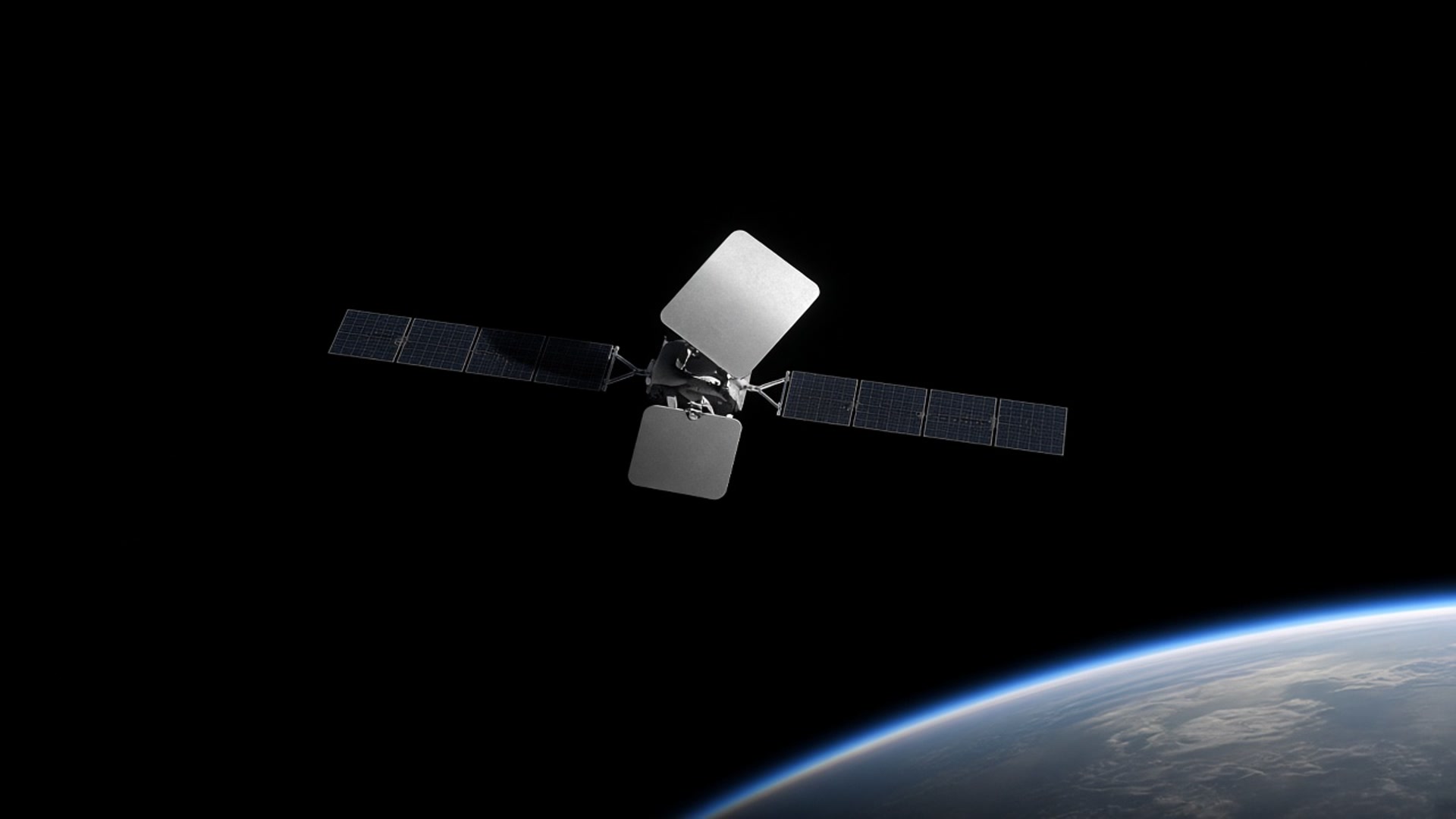
The Export-Import Bank of the United States has approved a $468 million credit facility for Astranis, which builds small satellites for geostationary orbit. The money comes through EXIM's Make More in America Initiative and is meant to fund domestic satellite production and the launch of the spacecraft it pays for. J.P. Morgan's Securitized Products Group was sole arranger, and EXIM says it is coordinating with NASA's Office of Strategic Space Finance.
The facility works like a line of credit: Astranis draws on it as production needs it. The work happens at a 153,000-square-foot headquarters and factory in Northern California with about 500 staff. The customers are mostly abroad. Gulf Space Technology in Thailand, Chunghwa Telecom in Taiwan, MB Group in Oman, and stc group in Saudi Arabia have all bought satellites, alongside the U.S. government. Each MicroGEO is built for a 10-year life on Hall-effect propulsion.
Astranis has five satellites built and in orbit, a backlog of more than $1 billion, and more than $1.2 billion raised from investors on top of the new credit.
Funded and flown both score here: the credit is approved and five MicroGEOs are in orbit. Second source stays open: the coverage names no parallel builder on these small GEO orders.
An EXIM facility pays back in finished satellites leaving the building on schedule. Part of the ride out is already booked: Astranis has a contract for Impulse's Helios stage to carry MicroGEOs from low Earth orbit to GEO in 2027.
In-space economy
Varda raises $251M to keep capsules coming home
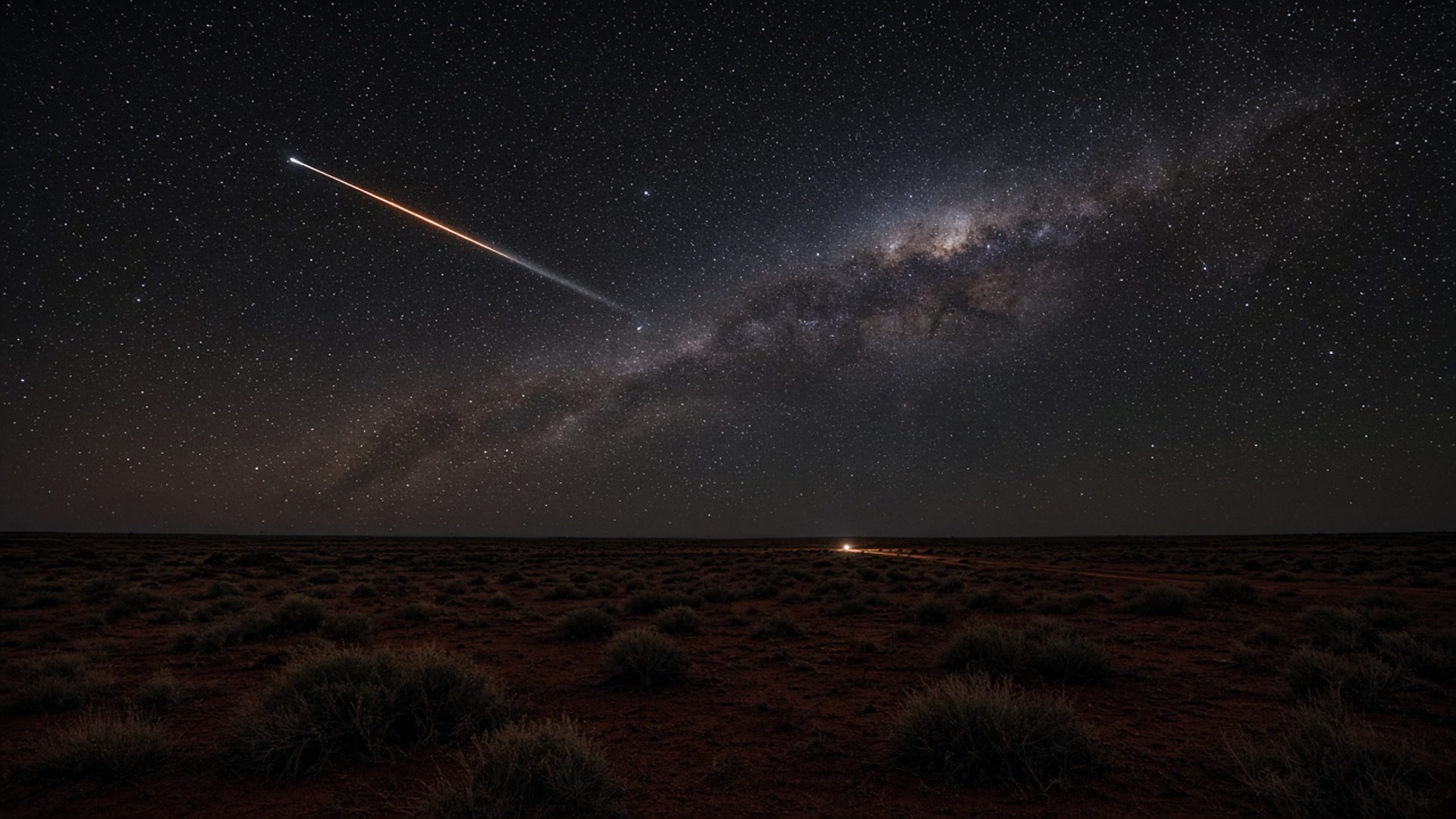
Bringing mass back from orbit on a schedule is the business Varda Space Industries is building, and it now has $251 million more to do it. Lux Capital and Natural Capital led the Series D, with Founders Fund, General Catalyst, and others in the round. Payload and Reuters put the valuation at $1.6 billion, and the El Segundo company's total raised at $598 million.
The product is a W-Series capsule that hosts work in orbit and reenters at about Mach 25. Varda's commercial bet is pharmaceuticals: crystallizing active ingredients in microgravity, where Reuters notes some products can reach better efficiencies or purities than on the ground. For now, most of the paying freight is government. CEO Will Bruey told Reuters that about 70% of next year's payload customers are government, with the reentry itself sold as hypersonic research for the Pentagon, and that he expects the mix to flip toward pharma by 2032. He also said Varda has 28 launches booked with different providers across 2027 to 2029.
The flight record needs one qualifier. Varda says it has safely returned six capsules; Reuters reports that its fourth mission did not reenter successfully. On Oct. 1, the company launched W-8 and W-9 together, its first time putting two capsules on one rocket.
The round is funded and the capsules fly. Second source stays open: Reuters names Inversion Space as a competitor for Pentagon reentry cargo, but no buyer is named running the two as parallel suppliers, and none exists yet for pharma processing.
Return is freight too. A capsule that lands on a booked date turns a lab result into a delivery schedule, and the turn toward pharma customers depends on those dates holding through 2028.
Launch
Northrop's first 21 Transport Layer satellites reach Vandenberg
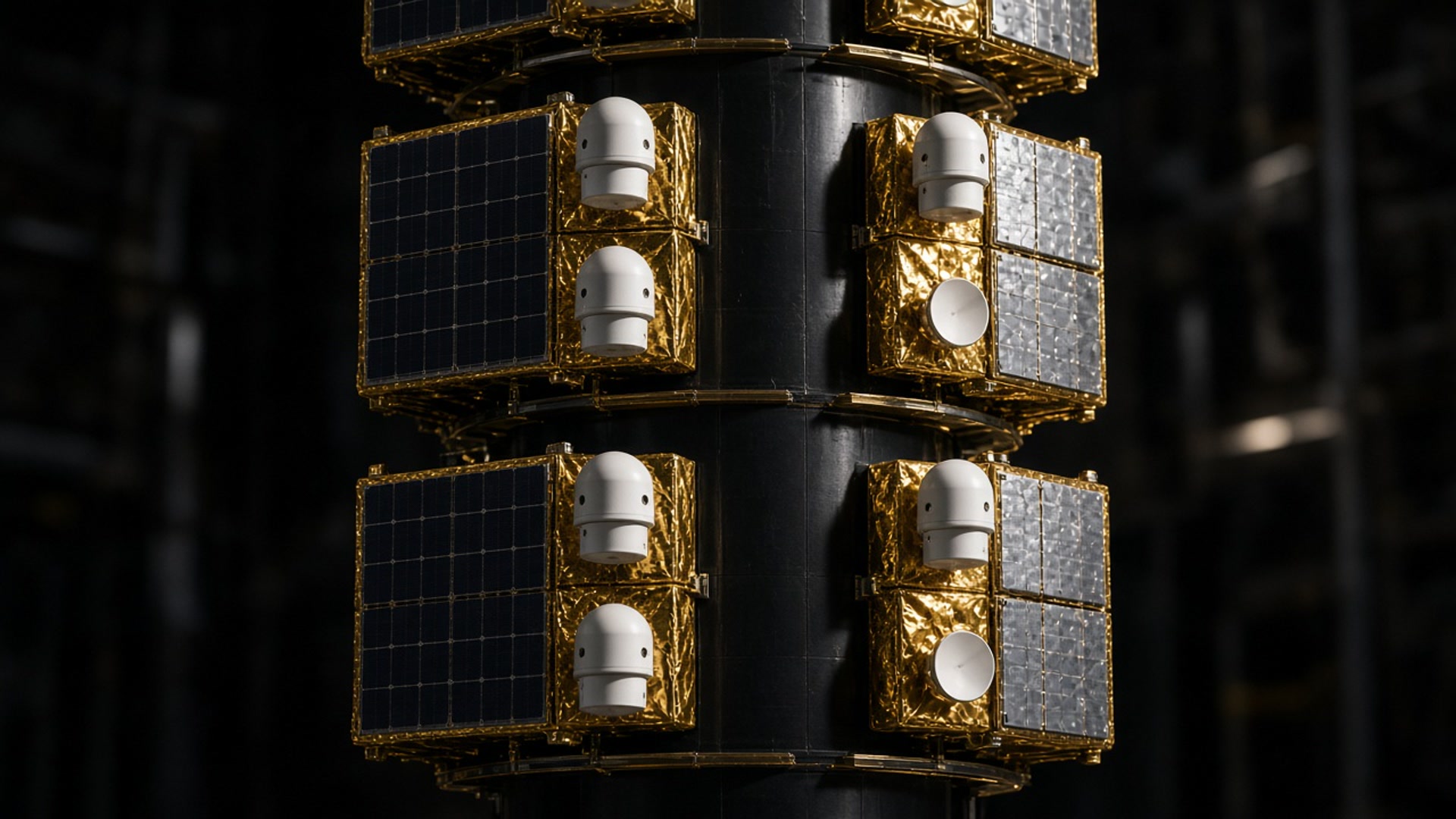
At Vandenberg Space Force Base, Northrop Grumman has delivered 21 satellites for the Space Development Agency's Proliferated Warfighter Space Architecture. They belong to the Tranche 1 Transport Layer, the network that carries communications and moves data for the Tracking Layer. Northrop calls the batch the first in a growing pipeline of 150 PWSA satellites, with dozens more fully integrated and in final checkout.
The Transport Layer has three builders. Via Satellite reports 126 Transport satellites in Tranche 1, 42 each from Northrop, York Space Systems, and Lockheed Martin. SDA scheduled this batch for an Oct. 6 launch, its fourth Tranche 1 mission and the first with Northrop hardware, after an Oct. 5 attempt ended in an automatic abort; once up, the 21 join 63 York and Lockheed satellites already flown. Northrop still owes another 21 Transport satellites and 14 missile tracking spacecraft.
The bottleneck has been quantity, not design. Tranche 1 runs more than a year behind plan, which Via Satellite ties mainly to delays in the optical communication terminals that link the satellites. After the first York and Lockheed launches, SDA took a nine-month pause to sort out on-orbit checkout issues. SDA Director Gurpartap Sandhoo told reporters the system's capability has not been the issue; building, testing, and operating satellites in large numbers has. "Twenty-one is a completely different ball of wax," he said of Northrop's first batch.
Funded and second-sourced, with three Transport builders under SDA contract; Northrop's own satellites score flown only once this batch is up and operating.
The count that matters now is satellites moved into SDA's operations center, not satellites shipped. So far the agency has moved only four of Lockheed's into it, and it wants every Tranche 1 satellite in orbit by late spring 2027.
Policy & capital
Open Cosmos raises €300M for four European satellite factories
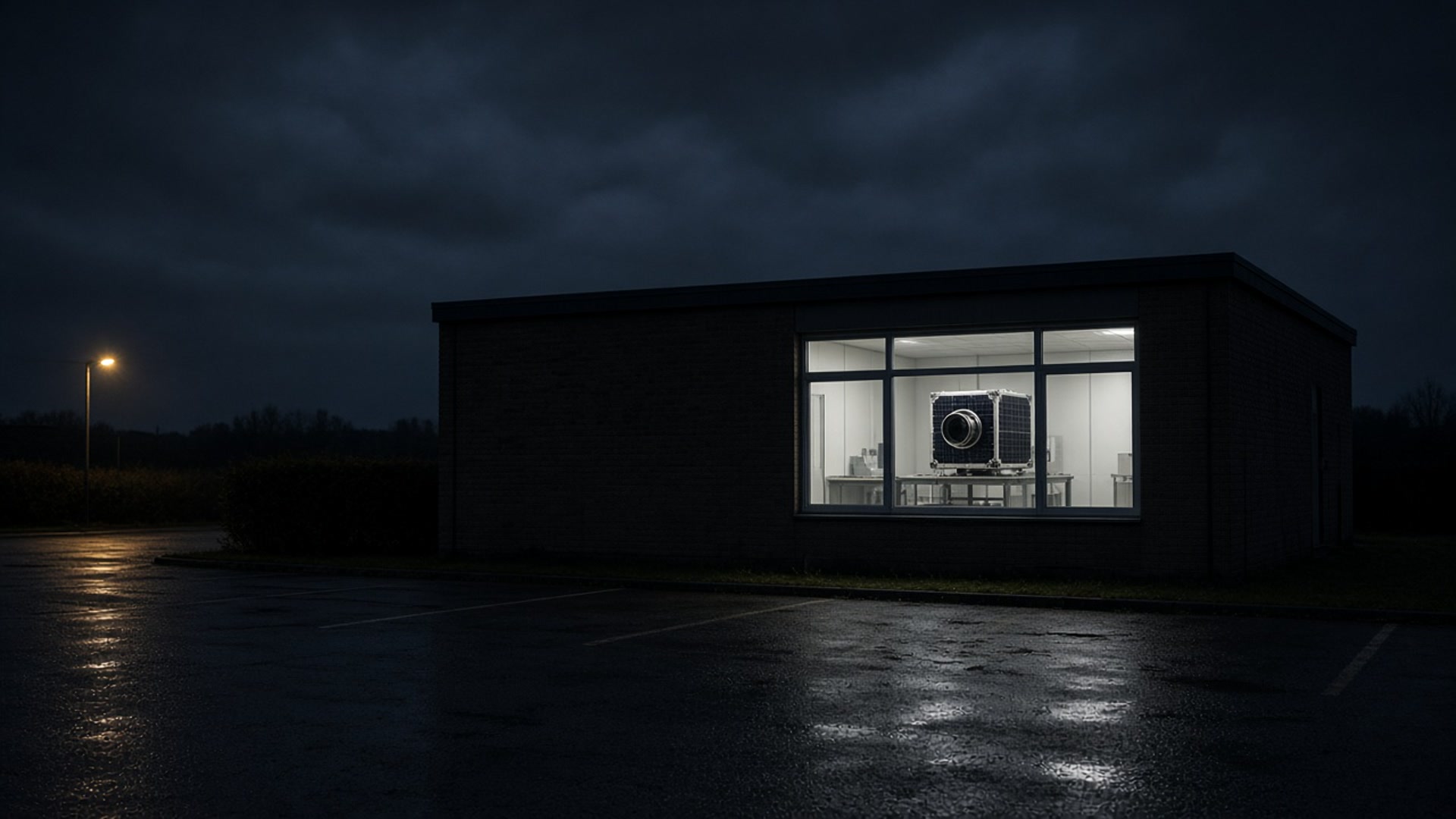
One satellite a day is what Open Cosmos says its four factories across Europe can now build. The Harwell, Oxfordshire company, founded in 2015, has raised €300 million, about $348.6 million by Payload's conversion, to expand them. European investors led the round, including Lightrock, ETF Partners, ICF, Entrepreneurs First, and two pension funds, with Convex, NSSIF, Phoenix Court, and Claret also in. Its last round, per TNW, was $50 million.
TNW calls the daily figure a statement about capacity rather than output, and that is the right reading. Open Cosmos reports more than $370 million in signed contracts over three and a half years and five consecutive years of profitable growth. Close to 400 staff work across the UK, Spain, Portugal, and Greece, where the company is building the country's first constellation. Its next-generation OpenConstellation satellites aim to cut Earth observation delivery from up to 48 hours to as little as 30 minutes. The ConnectedCosmos satellites launched within two months of the company gaining access to Liechtenstein Ka-band filings.
The investor list matters to Europe's balance sheet. Payload cites an ESPI report that no European private investor led a growth round in 2025; this one keeps the factory money European.
Two boxes are checked, since the money is raised and ConnectedCosmos satellites have launched. Second source is not, because a factory raise answers no single requirement and the coverage names no parallel supplier.
Capacity is installed; output arrives only as orders fill the line. Greece's first constellation is the nearest job on the books to test that line, and the 30-minute promise depends on OpenConstellation satellites coming off it.
In-space economy
Impulse adds $308M as Helios fills its manifest
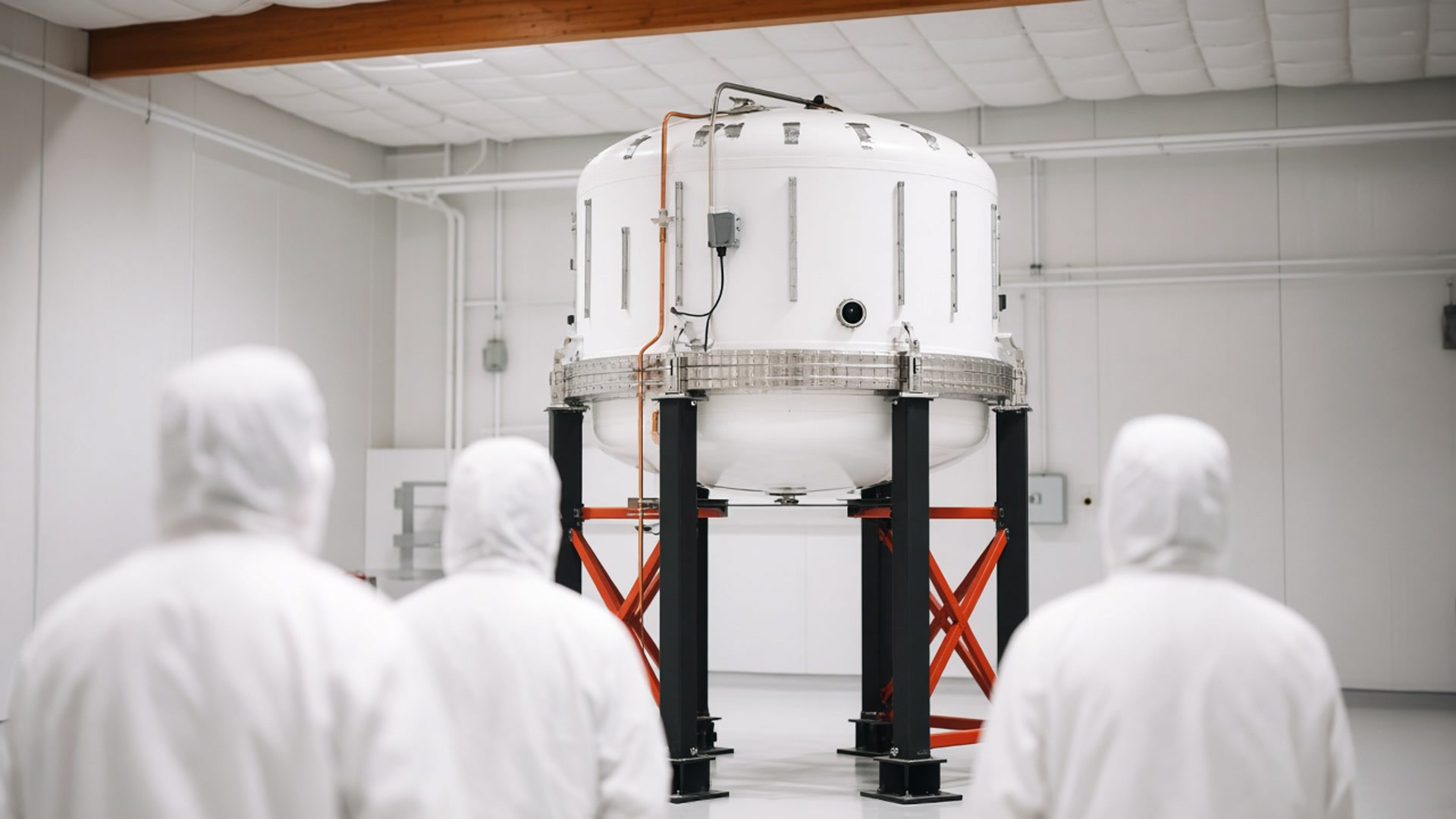
"We're really full on our manifest for Helios," Impulse Space President Eric Romo told Reuters, and that is the case for the company's new money. Existing investors put in a $308 million Series D extension, bringing the round to $808 million after a $500 million first close in June.
Helios is a kick stage built to carry satellites from low Earth orbit to geostationary orbit in under a day, with a first launch planned for 2027. Its 2028 Caravan 2 and Caravan 3 rideshare missions are sold out, Payload and Reuters both report. Helios also has 2027 dedicated missions for Astranis and SES under contract. In July, Space Systems Command added Impulse to the National Security Space Launch Phase 3 Lane 1 pool, an upper-stage company among rocket builders; Helios can compete for missions only after it has flown.
The money goes mainly to hiring and manufacturing. Impulse says headcount more than doubled in a year; Reuters puts it above 600 employees with more than 180 open roles. The company also named its first chief financial officer, Adam Townsend, formerly of VIZIO.
Funded, yes. Flown, not yet: Helios first launches in 2027. And no parallel supplier for this LEO to GEO delivery is named in the coverage, so Helios clears one of three today.
A sold-out stage that has not flown turns the factory into the schedule. Every Helios that ships late moves a GEO operator's service date with it, Astranis among them. The transfer problem gets harder past GEO: a crewed lunar lander has to be refueled in orbit before it can leave at all.
In-space economy
Foothold 2 of 6: "How much has to land"
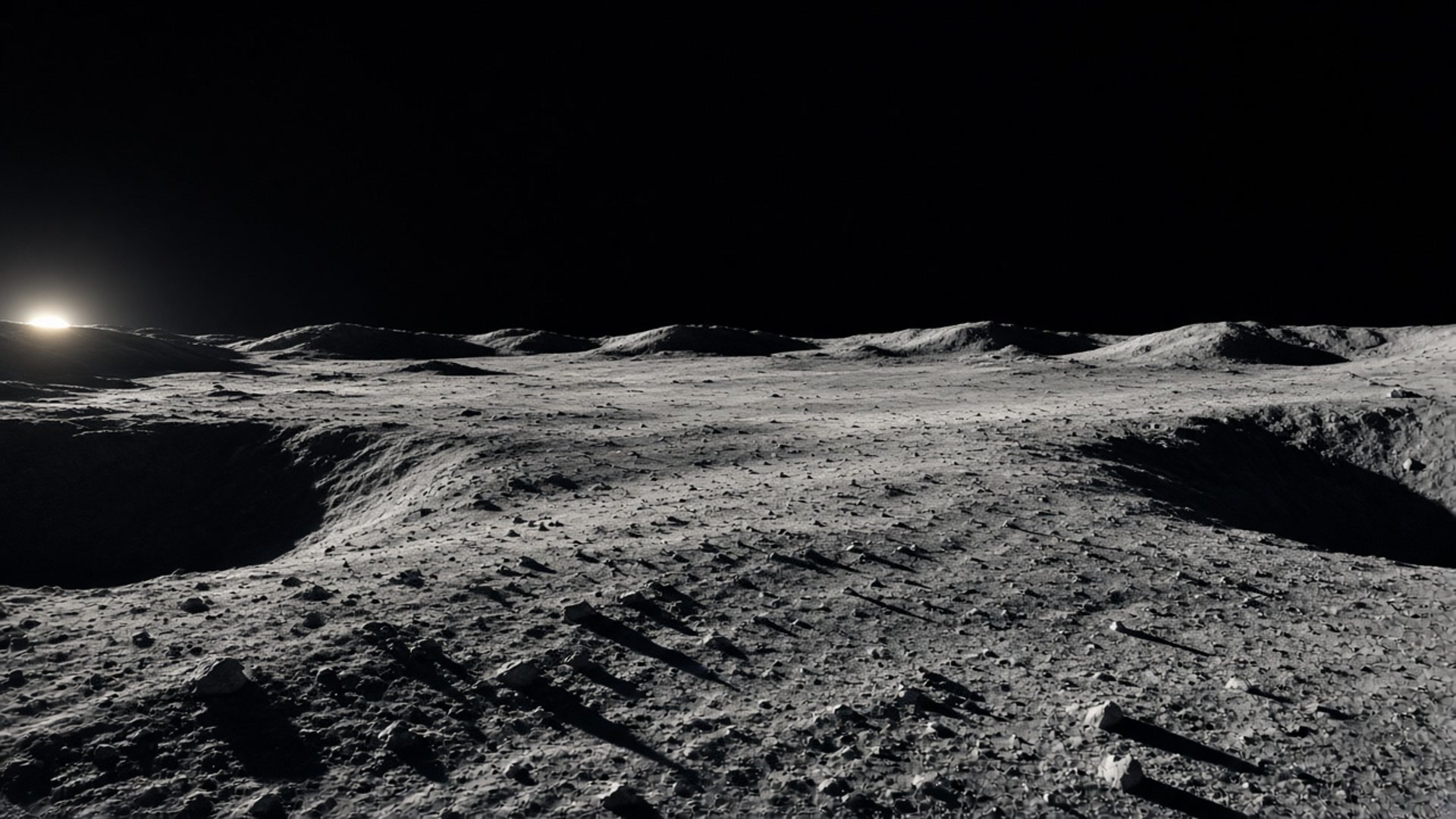
Foothold 1 ended on an invoice: how much mass has to land, how often, and who pays the transfer. NASA has put numbers on the first part. Its 2024 lunar surface cargo paper forecasts up to 10,000 kilograms a year of recurring logistics once crews visit annually, plus single deliveries up to 15,000 kilograms for rovers and habitats. The same paper finds a gap between 500 and 12,000 kilograms. Commercial Lunar Payload Services task orders cover 70 to 475 kilograms. Above 500 kilograms, the only landers in that architecture are cargo versions of the two crewed Human Landing Systems.
Those cargo landers are rated for 12 to 15 metric tons. NASA plans to have SpaceX's Starship lander deliver JAXA's pressurized rover no earlier than fiscal 2032, and Blue Origin's Blue Moon a surface habitat no earlier than fiscal 2033. Until then, the heavy end of the forecast has a manifest and no flights.
Neither lander leaves Earth orbit on its own propellant. NASA's inspector general describes the larger vehicle's plan as a storage depot launched to low Earth orbit, then more than 10 tanker flights starting more than 200 days before crew launch, at a target of one every six days from Texas and Florida. A later OIG report on launch infrastructure says at least 15 tankers. Space.com puts outside estimates at eight to 20. The fueled lander can wait up to 100 days. Blue Origin's concept uses a transporter as its depot, fed by refuelers, with a final top-off near the Moon.
That makes landing rate a flight-rate problem first. A tanker every six to eight days, sustained for months, is factory and pad throughput, and the OIG notes that a single launch's propellant load could exceed the power available at Kennedy's pad 39A.
The two links that matter are unproven. The rocket behind the larger lander reached orbit for the first time on Sept. 28, but ship-to-ship propellant transfer has not flown. The OIG calls cryogenic transfer one of the program's most significant technical challenges; the test had already slipped from March 2025 to March 2026. Blue Moon's path runs through New Glenn, and a May static-fire explosion damaged Launch Complex 36, the rocket's only pad. Blue Origin now expects its first Mk1 cargo lander, Endurance, to launch in the first quarter of 2027.
NASA's revised plan makes Artemis III a 2027 docking test in Earth orbit and lets lander readiness pick the provider for the 2028 landing. The money is real: the OIG counts $6.9 billion obligated for HLS since 2019 and $18.3 billion expected through fiscal 2030. Two providers are the second source; NASA added the second contract in 2023 "to maximize competition and provide redundancy." Landed is the empty box. Funded and second-sourced, heavy surface delivery scores two of three, and until a cargo lander touches down it is not a foothold yet.
The invoice is propellant before payload: a depot filled on schedule, a transfer that works in orbit, and pads that hold their rate for months. Whatever lands after that has to survive its first lunar night.
End of issue 008
If this was useful, the next one lands Monday.