

The briefing · Vol. 08 · No. 005
15 September 2026 · Connectivity · In-space economy · Earth observation · Policy & capital · 10 min read
What the slot actually buys
A €760M Nyx cargo service under ALADDIN. €2.4B for 264 IRIS² LEO platforms. $161M to path a space reactor. Exclusive Gen-3 EO inside a $1B / 50-sat Altair build. Two Alpha flights from Esrange NET 2028. The mine still has to move the mass.
What this issue is actually about
Awards close as seats: a cargo capsule service line, a megafactory LEO book, a reactor demo path, an exclusive optical slot in a France-UAE constellation, and a mainland-Europe orbital franchise. Installation is the reserved place in the stack. This issue is those seats, then the mine’s next problem: getting product off the body once the site is fixed.
Cargo
"Nyx under ALADDIN": ESA books €760M cargo service
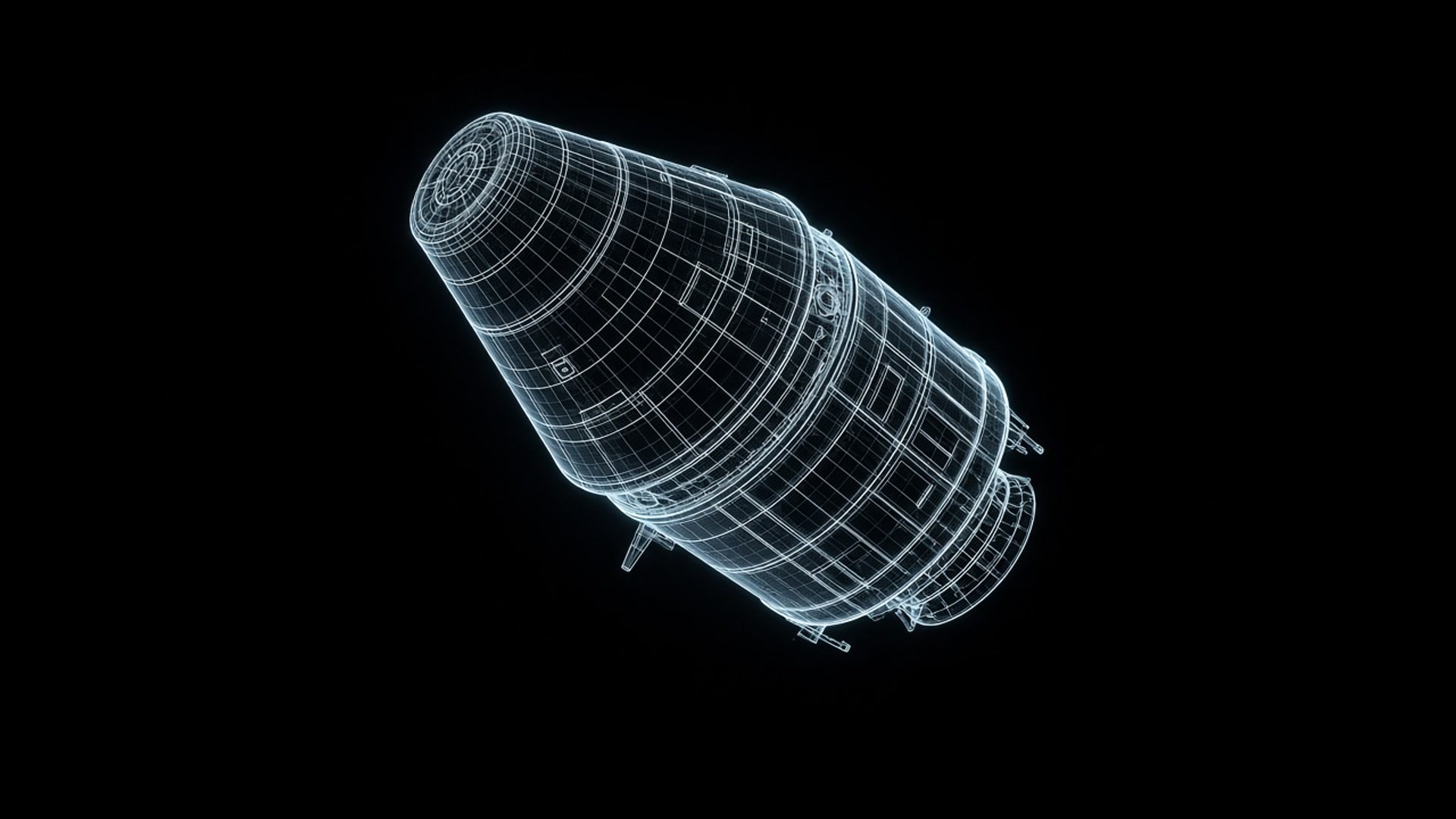
ESA signed a €760 million service contract with The Exploration Company for its Nyx vehicle under ALADDIN, Europe's autonomous LEO cargo capsule program. The split is hard: €310 million for a demonstration mission and €450 million optional for two additional cargo flights to the ISS or a future commercial station. The award was signed at the International Space Summit in Paris on 10 September 2026.
ALADDIN (Autonomous LEO Accelerated Demo Docking to ISS Node) is Phase 2 of what started as the Leo Cargo Return Service. Member States had put €25 million into each of two early projects in 2022. Phase 2 opened for tender in March 2026 and moves from concept work to full system completion and in-orbit demonstration, with autonomous docking on a tight operational window.
TEC covers about 40% of the Nyx demo from private investors. ESA covers the remaining 60% as anchor customer. ESA calls it the first and largest capsule transportation service contract it has awarded to a European company. That framing matters: the buy is missions delivered, not a brochure capsule left on a slide deck.
Nyx is the vehicle. The contract is the service architecture. Cargo to and from stations in LEO is a capability only a handful of nations have run. Europe is buying that path through a five-year-old startup that already cleared technical readiness gates in open competition.
If the demo docks and the options convert, Europe installs a commercial cargo pipe it can reorder. The optional €450 million is the real commitment test: whether Member States treat Nyx as a recurring service line or a one-shot industrial gesture.
Connectivity
"IRIS² LEO": Aerospacelab takes €2.4B for 264 birds
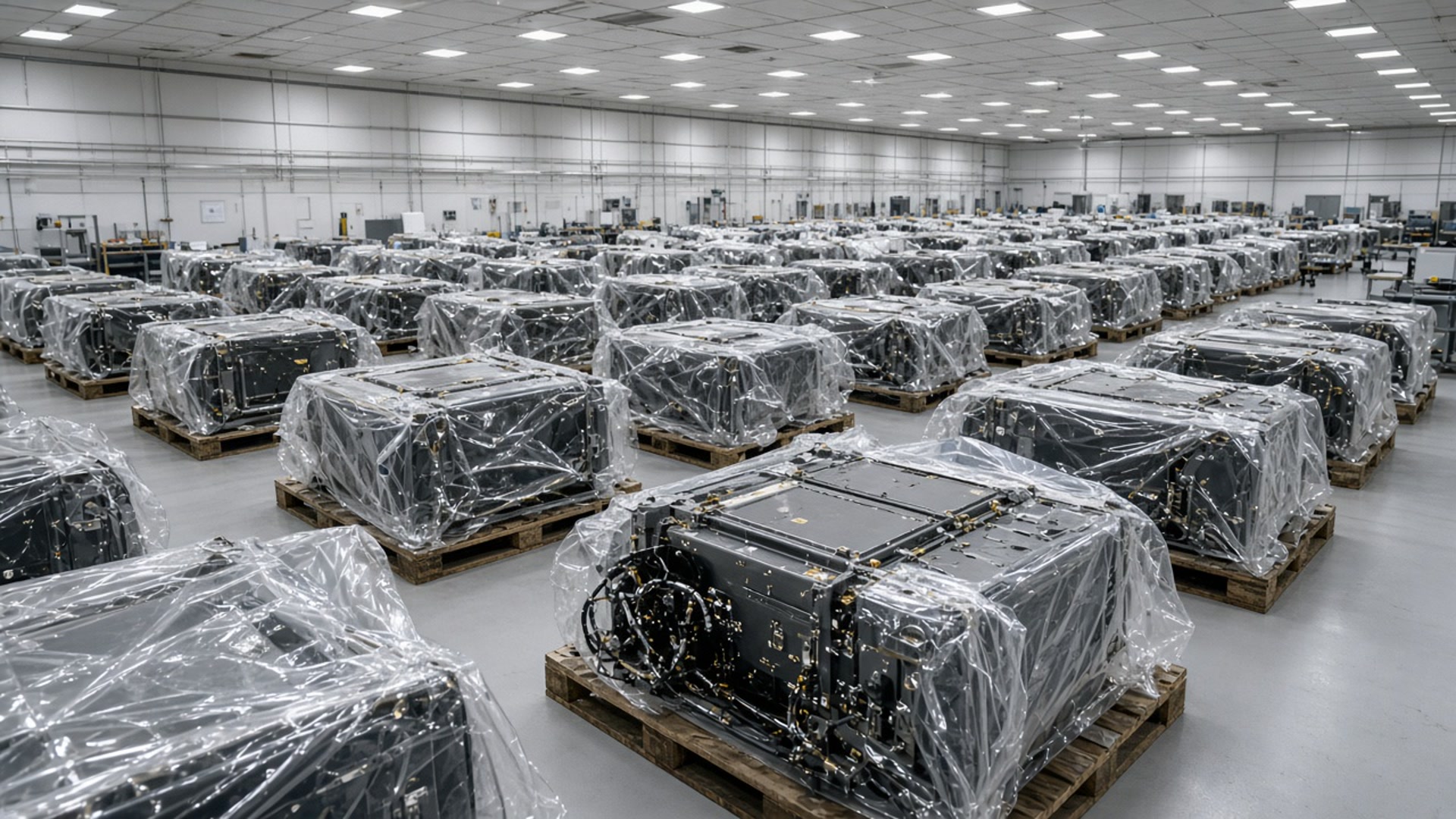
Aerospacelab won a €2.4 billion contract to design, produce, and deliver 264 fully integrated low Earth orbit satellites for the EU's IRIS² secure-connectivity constellation. That is 264 of the program's planned 348 birds, the largest disclosed manufacturing tranche under IRIS² to date. The award was announced 10 September 2026 after competitive dialogue with Eutelsat, LEO-segment lead inside the SpaceRISE consortium.
IRIS² splits across shells. The LEO majority sits with Eutelsat; the 18 MEO platforms sit with SES. Issue 004 covered OHB's nearly €1 billion MEO bus order for those 18 heavy platforms. This award is the LEO factory book: Aerospacelab as prime for platforms plus integrated satellites that form the backbone of Layer Two connectivity by 2030. Other LEO work remains outside this tranche, so 264 is the majority build, not the whole LEO shell.
The industrial choice is deliberate. Institutions are routing a multi-billion manufacturing mandate through a company built for high-throughput satellite production, not a legacy single-satellite line. Aerospacelab's Megafactory in Europe was designed for programs of this magnitude, with hundreds of flight units on the order sheet and full satellite delivery, not bus-only kits.
IRIS² remains a public-private concession: European Commission lead, ESA and EUSPA on the technical side, SpaceRISE as operator. First satellites are still aimed at the late decade, with initial services around 2030. Aerospacelab now owns the majority LEO build that makes that timeline real or late.
Two hundred sixty-four birds at €2.4 billion locks the LEO half of Europe's secure pipe into a single prime's plant. Whether that plant holds schedule is the program risk that matters next.
Policy
"Space reactor path": Antares wins $161M
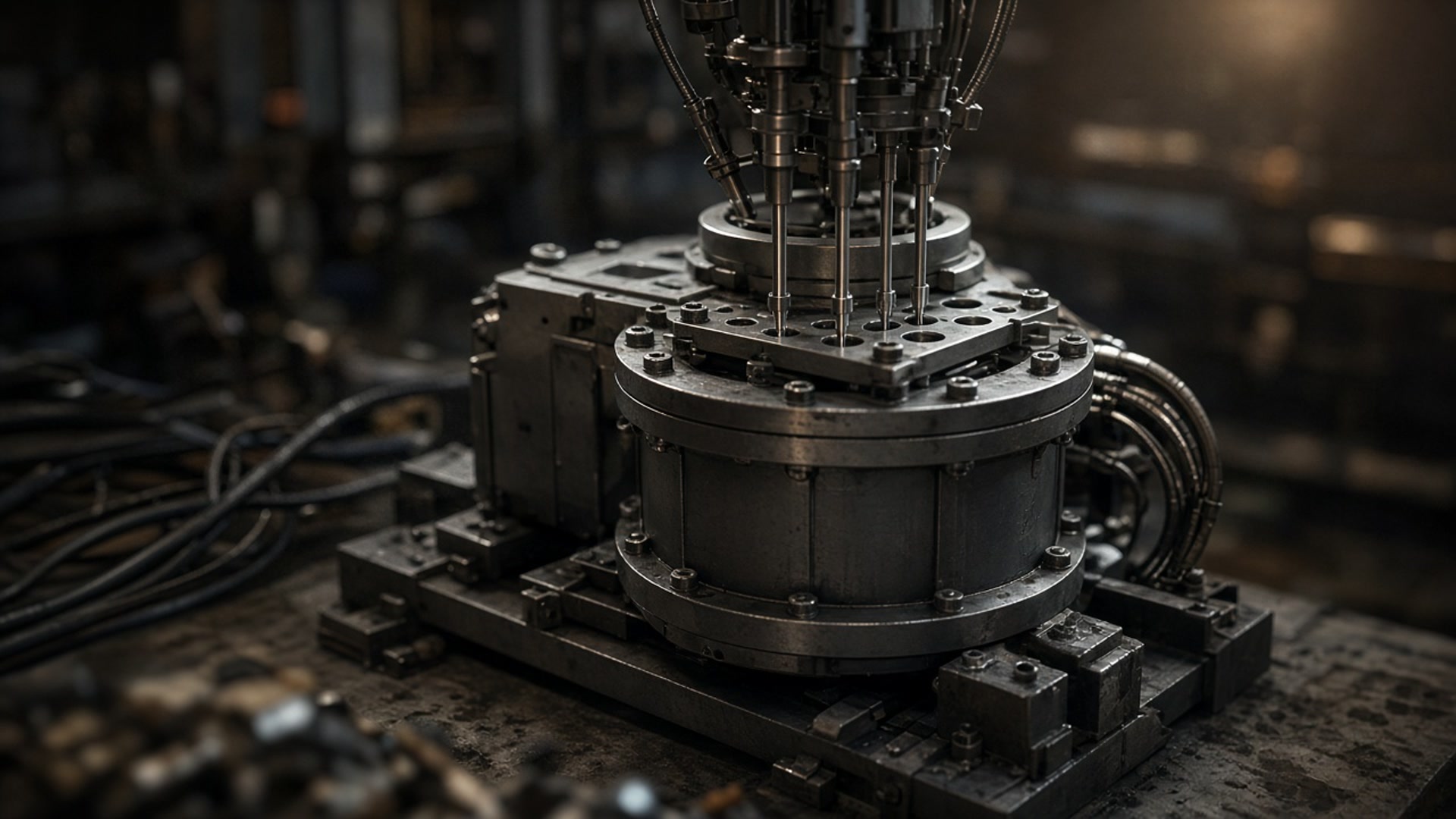
Antares took a $161 million Strategic Breakthrough award from the Office of the Assistant Secretary of the Air Force for Space Acquisition and Integration (SAF/SQ) to advance nuclear power for space. The announcement landed 11 September 2026 out of Torrance.
The contract tasks are concrete. Antares will run a nuclear ground demonstration of R1-S, a heat-pipe microreactor variant sized for space. It will integrate with a spacecraft for flight certification ahead of launch. It will also power an operational ground-to-space asset with Mark-1, the electricity-producing reactor lined up for testing in 2027.
Hardware context is already on the books. Mark-0 reached initial criticality at Idaho National Laboratory on 4 June 2026 under DOE's Reactor Pilot Program, the first private advanced reactor to do so in that line. Mark-1 is scheduled to run more than six months in 2027 on a nitrogen closed Brayton cycle. A $470 million Series C in July funds the buildout behind the award.
Always-on fission changes what a spacecraft can keep lit: continuous maneuver, heavy compute, and electromagnetic systems that solar arrays cannot sustain through eclipse and power rationing. The buy is not a study. It is ground demo, bus integration, and a 2027 power run on a path that policy timelines still point toward orbital reactors as early as 2028.
One reactor flew for the U.S. in 1965. Sixty years later the industrial question is whether a compact heat-pipe machine can clear flight certification and become a product the Space Force can install, not another paper reactor.
Earth observation
"Altair Gen-3": BlackSky locks exclusive EO for 50 sats
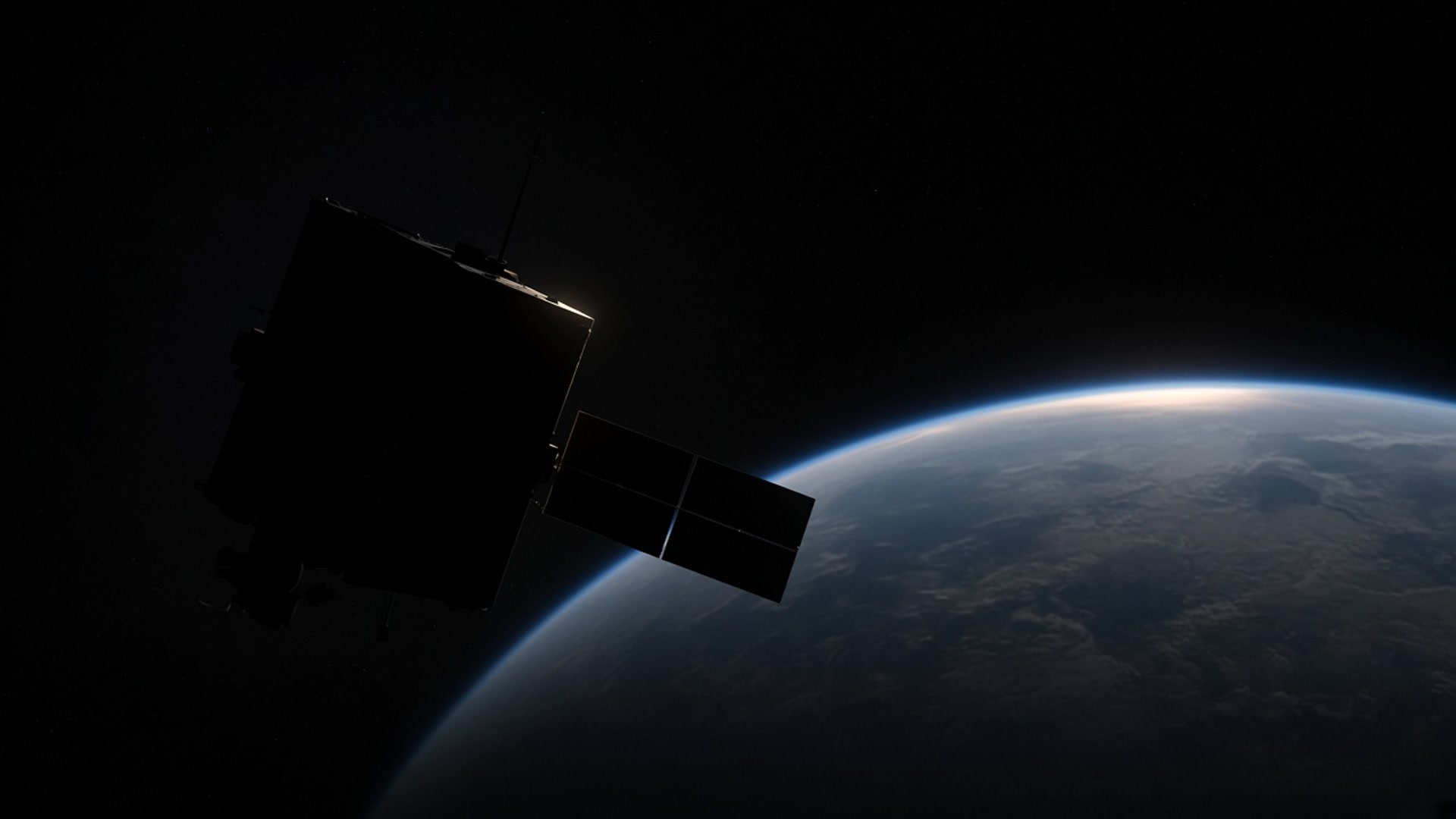
BlackSky is the exclusive very high-resolution electro-optical provider for a new fifty-satellite constellation aimed at France, Europe, and the UAE. The company announced the role on 9 September 2026 at the International Space Summit in Paris, alongside Marlan Space and Loft Orbital. The birds ride BlackSky’s Gen-3 platform inside a mixed sensor stack that also carries radar and other payloads.
The capital frame is a consortium investment, not a BlackSky prime award. Marlan Space, Loft Orbital, Mistral AI, and other partners in the UAE and France are putting about $1 billion behind what trade coverage calls the Altair sovereign-intelligence build, expanding plans from ten satellites to fifty. BlackSky has not broken out its share of that dollar, and the press materials do not say how many Gen-3 units sit inside the fifty. Treat $1B as the program envelope. Treat exclusive EO provider as the industrial fact.
Orbitworks, the Loft-Marlan joint venture in Abu Dhabi, is the production house for Altair. The first ten satellites are already in work, with launches framed from an October 2026 window. France’s MaiaSpace is the preferred launcher in secondary coverage. BlackSky’s Spectra tasking and analytics stack stays on the intelligence side of the house; this announcement is about hardware seat, not a software sermon.
The product is still Gen-3 optics: high-resolution imaging inside an ops loop built for fast alerts. The contracting pitch is simpler. A France-UAE consortium is buying a multi-sensor constellation at fifty birds, and it named one U.S. EO builder as the only very high-resolution optical source. Until more program numbers land, the honest ledger is exclusive Gen-3 EO in a $1B, fifty-sat build whose BlackSky tranche remains opaque.
Launch
"Esrange Alpha": Firefly books two flights NET 2028
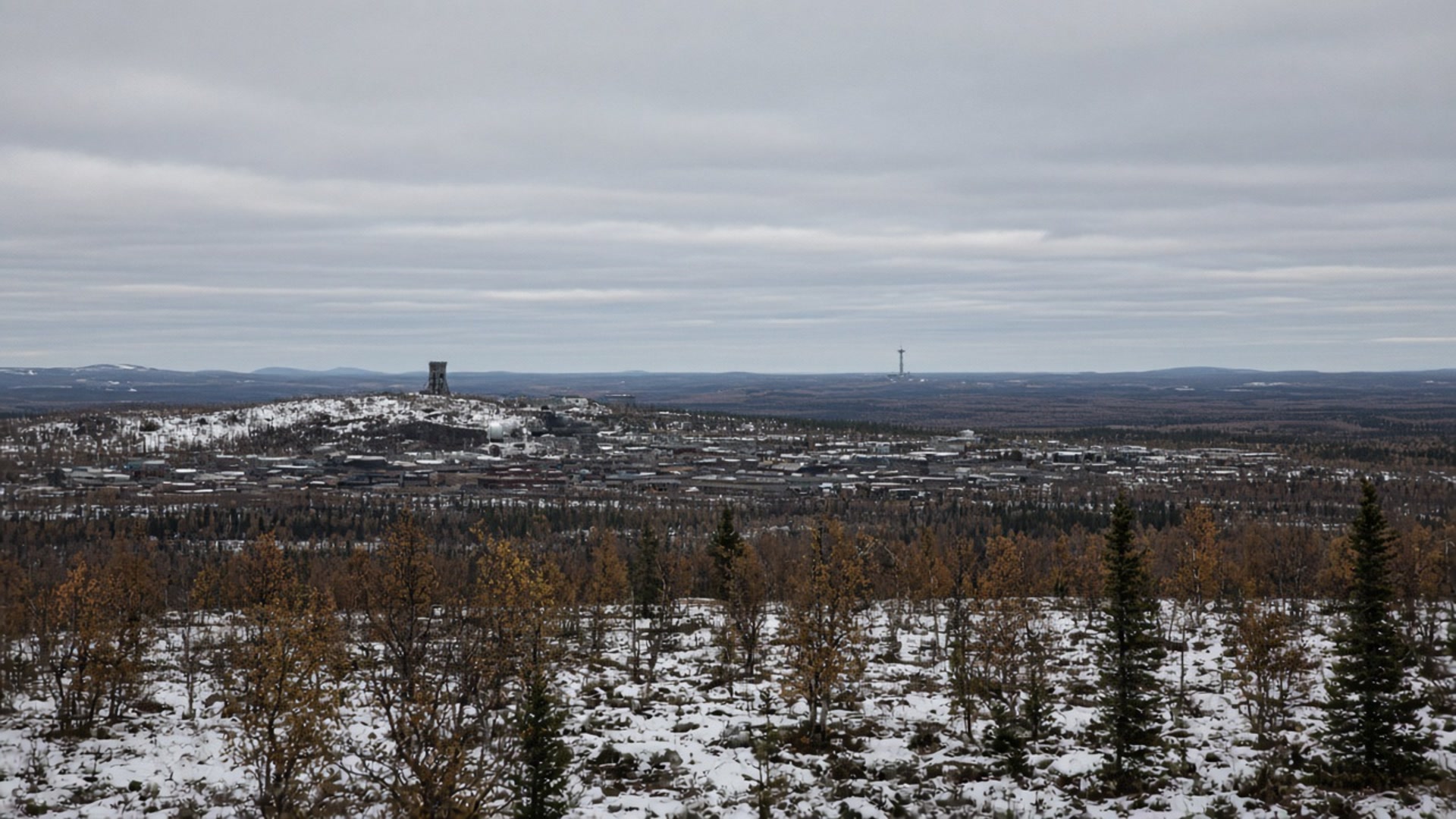
Firefly Aerospace signed a multi-launch agreement with SSC Space for two Alpha missions from Launch Complex 3C at Sweden’s Esrange Space Center. The company announced the deal on 9 September 2026. First flights are targeted no earlier than 2028. Sweden national-security customers sit on the book, with commercial rideshare capacity available under SSC’s allocation.
Dollar figures are soft. The industrial count is hard: two dedicated Alpha slots from mainland Europe, with SSC holding full payload capacity and the right to place government and commercial customers. Firefly frames the work as the opening chapter of a longer multi-launch partnership and as proof of its “launch as a franchise” model. SSC gets an orbital product at Esrange. Firefly gets a European pad that is not a one-off demo range.
The agreement follows earlier work that put transatlantic regulatory frameworks in place and finished major ground infrastructure for Alpha at LC 3C: launch control center, payload processing facility, launch vehicle integration building, tracking and control systems, plus security and storage. Final pad construction is still underway. That sequence matters. The franchise is not a press-kit pad. It is a control room, a processing line, and a vehicle integration bay that already exist while the pad itself finishes.
Esrange’s pitch is orbital access from Swedish ground for European government and commercial demand. Firefly’s pitch is a proven small-lift vehicle and a partnership structure that can reorder missions as demand grows. Two Alphas NET 2028 do not make a flight rate. They do install a franchise: a pad, a customer stack, and a contract that treats Esrange as an Alpha destination rather than a one-time range visit.
In-space economy
Mining 5 of 6: "Mass Off Body"
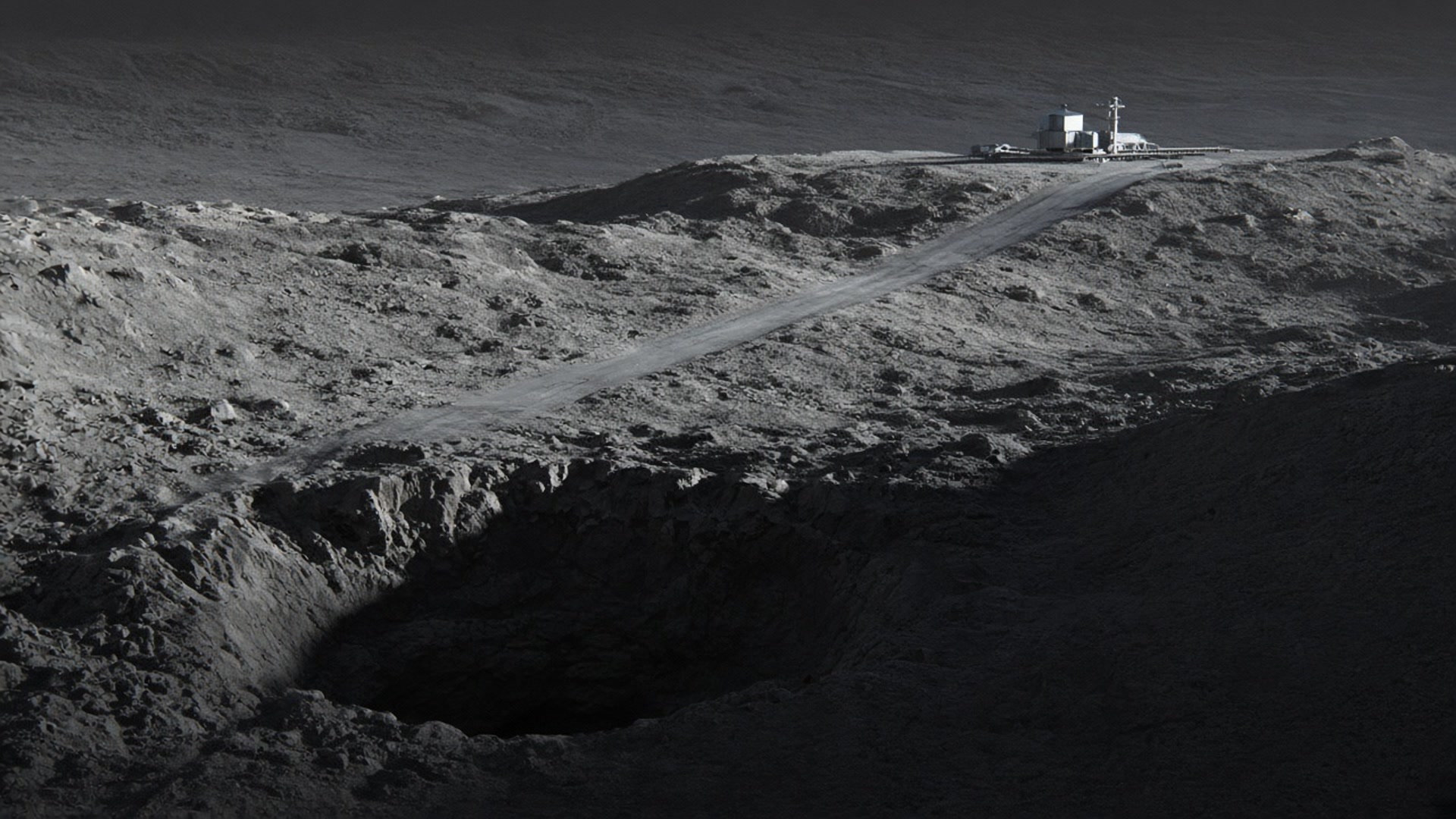
"Where" has been chosen. The ridge has power. The shadowed floor has feedstock. Pads and haul sit between them. Mass off body is what happens after the hole is fixed: excavation, process, propellant or product, depot, then hop or launch. The balance sheet shifts from geology to transport physics.
Excavation is the first meter. Ice-bearing regolith or oxygen-bearing fines leave the working face as bulk. That mass is cheap on the floor and expensive the moment it moves. Haul distance, grade, and thermal swing set the first tax. A short traverse from permanently shadowed region to lit processing ground is not a nice-to-have. It is the difference between a mine and a stranded stockpile.
Processing turns bulk into product. For ice paths: water extraction, purification, and electrolysis into hydrogen and oxygen. For oxygen-from-regolith paths: chemical reduction and gas capture. The plant sits where power is reliable and plume standoff from pads is real. Product that cannot be tanked, transferred, and metered is not product. It is wet dirt with a press release.
Propellant and depot are the industrial middle. LOX and hydrogen, or LOX and a storable fuel, only earn their keep if a depot can accept them, hold them through lunar night, and dispense them into a lander, hopper, or transfer stage. Insulation and transfer lines dominate cost once the chemistry works. A mine that makes propellant with no customer interface is an inventory problem wearing a spacesuit.
Hop and launch are the last tax. Moving kilograms from crater floor to ridge pad, low lunar orbit, or a waiting depot burns Δv that never shows up in the resource assay. Surface hoppers trade simplicity for repeated burns. Direct ascent trades pad proximity and vehicle performance for a cleaner logistics line. Either path, pad location is capital. A plant three kilometers from a usable pad is a different company from one that shares a plume corridor with the lander.
Δv and pad proximity dominate the ledger once Where is locked because every other cost becomes a function of distance and energy. Power follows process load. Tanks follow hold time and customer cadence. Vehicles follow the Δv budget from face to orbit. Resource grade still matters. It no longer sets the story. Transport does. A rich PSR with no short path to power and pad is a science site. A thinner deposit with co-located power, plant, and pad is a mine.
Mass off body is a logistics architecture, not a chemistry essay. Excavate, process, tank, depot, hop or launch. Each step only pays if the next step is real. The Moon is near enough that you can fly the stack again when it fails.
Earth markets are next. Part 6 asks who pays for propellant, oxygen, and metals once the mass actually leaves the body. That question only opens after the transport line works. For now the cut is simpler: site fixed, mass must move, and Δv plus pad proximity write the invoice.
End of issue 005
If this was useful, the next one lands Monday.