

The briefing · Vol. 10 · No. 010
20 October 2026 · In-space economy · Policy & capital · 7 min read
Before the first unit
Blue Origin puts $554.8 million into a satellite factory in Hutto, Texas, that has yet to start a line. Rocket Lab moves Neutron to 2027 after voids turn up in a cured carbon fiber tank dome. CSG buys 9.5 percent of MDA Space, a stake and not a contract. ClearSpace wins the UK's £61 million prime to remove two dead satellites. Foothold 4 asks what keeps a lunar foothold alive when one lander slips, and finds one commercial design upright on the surface.
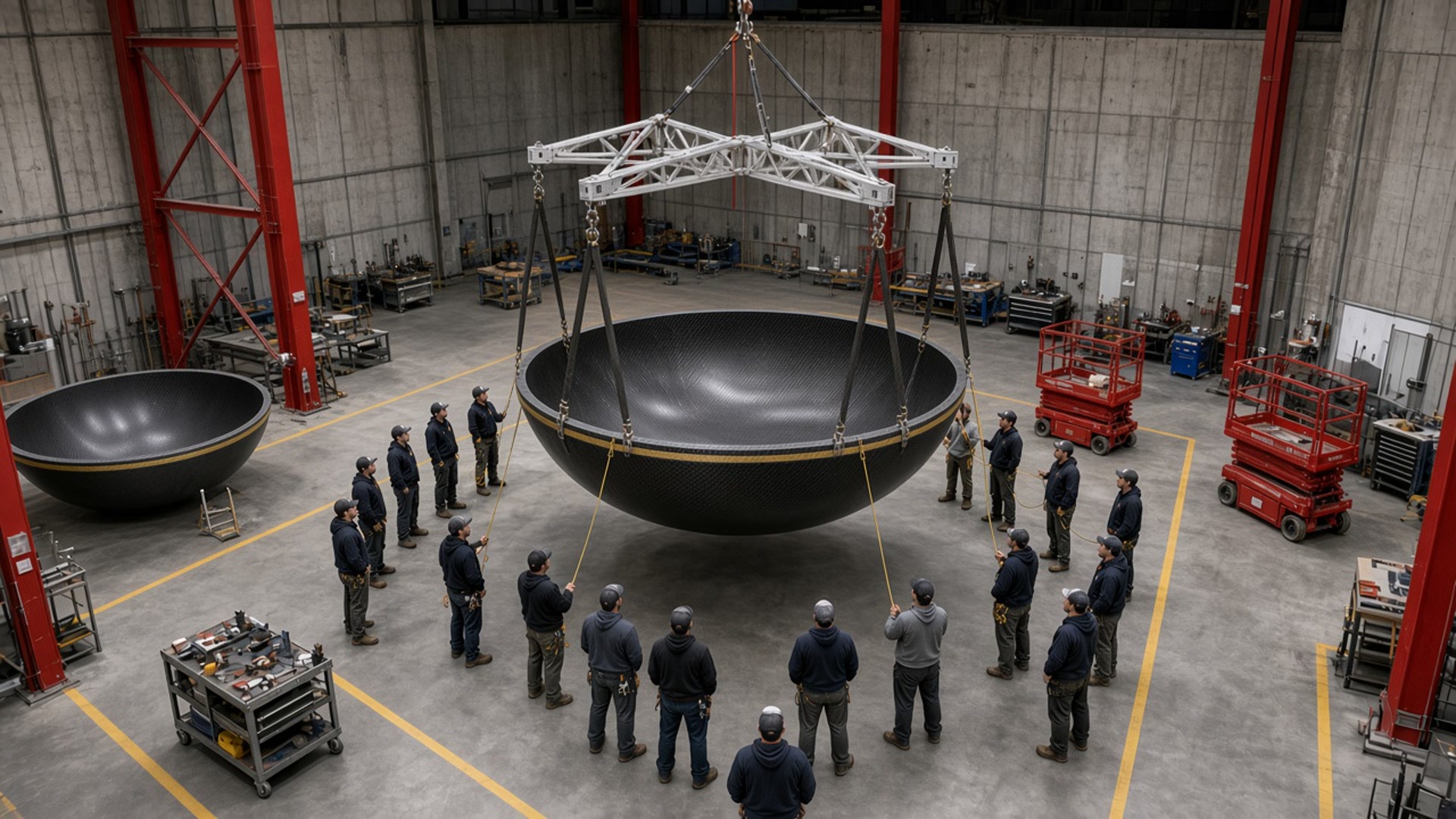
What this issue is actually about
Every piece this week is money or a contract ahead of the hardware. Blue Origin's Hutto campus is funded and unbuilt, a schedule bet against its own constellation's first launches. Neutron is funded and unflown, held up in the factory, where a fix for strength changed how a dome cures. CSG's money is settled equity with no order attached. ClearSpace has a funded national contract and no flight yet, with 2029 as its operations target and 2032 as the government's deadline. Foothold 4 of 6 scores lunar cargo: funded across three providers, landed upright once, second-sourced only on paper.
Manufacturing
Blue Origin picks Hutto for a $554.8 million satellite factory
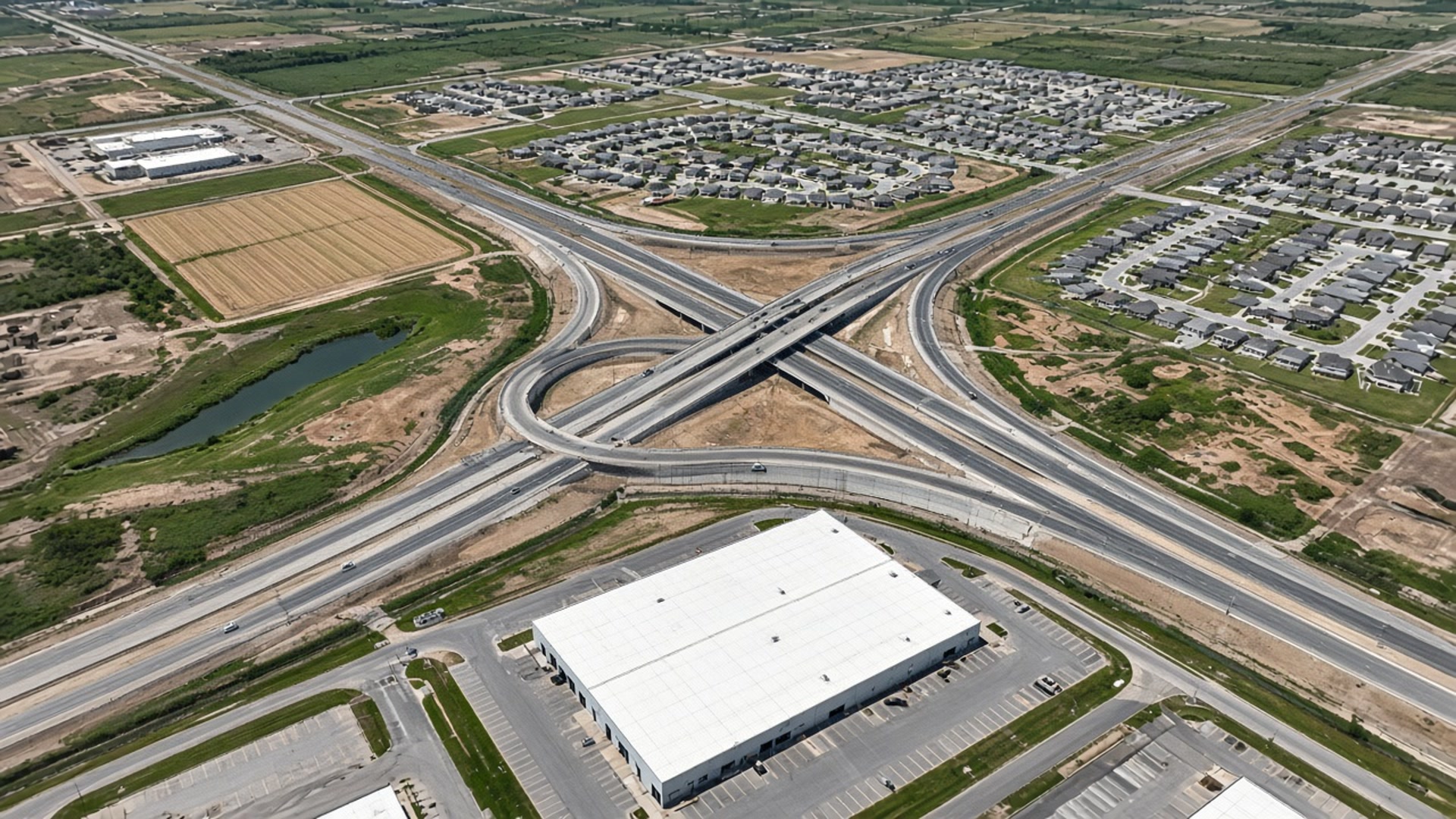
Blue Origin will build its satellites in Central Texas. Gov. Greg Abbott's office said on Oct. 8 that Blue Origin Manufacturing will put $554.78 million into an advanced manufacturing and operations campus in Hutto, northeast of Austin, and create more than 2,000 jobs, over 10 years by Blue Origin's count. The company calls it Constellation Park: 1.3 million square feet across several buildings on the 118-acre Hutto Crossing site.
The work is specific. Blue Origin says the campus will be a central production hub for its satellite and communications programs, and AustinIO and Groundbreak Austin both list the lines: TeraWave satellites, antennas for the Project Quartz ground network, solar arrays and avionics. TeraWave is the network Blue Origin announced in January, with deployment planned from the fourth quarter of 2027.
The public money is conditional. The state extended an $18.17 million Texas Enterprise Fund grant, which pays out only as job and wage targets are met, plus a 10-year Williamson County incentive agreement. Local filings in August carried higher investment figures, $650 million to $674 million; the state set the number at $554.8 million.
Nothing is built yet. Blue Origin will convert an existing vacant building, and Groundbreak lists completion by Oct. 31, 2027. AustinIO reports construction starting early in 2027 and first assembly lines late that year, timed to TeraWave's first launches.
Funded, by company capital with a performance grant behind it. Flown, no: no TeraWave satellite exists. Second source does not apply, since one company designs, builds and buys this constellation.
A factory announced a year before its constellation's first launch is a schedule bet: if Hutto's lines start late, TeraWave waits for Hutto.
Launch
Neutron's first flight moves to 2027 on a tank dome cure
Rocket Lab's Neutron will not fly this year. The company said on Oct. 14 that the first launch of its reusable medium-lift rocket now falls in 2027; it had targeted the fourth quarter of 2026, Reuters reports. Shares fell about 6 percent in extended trading.
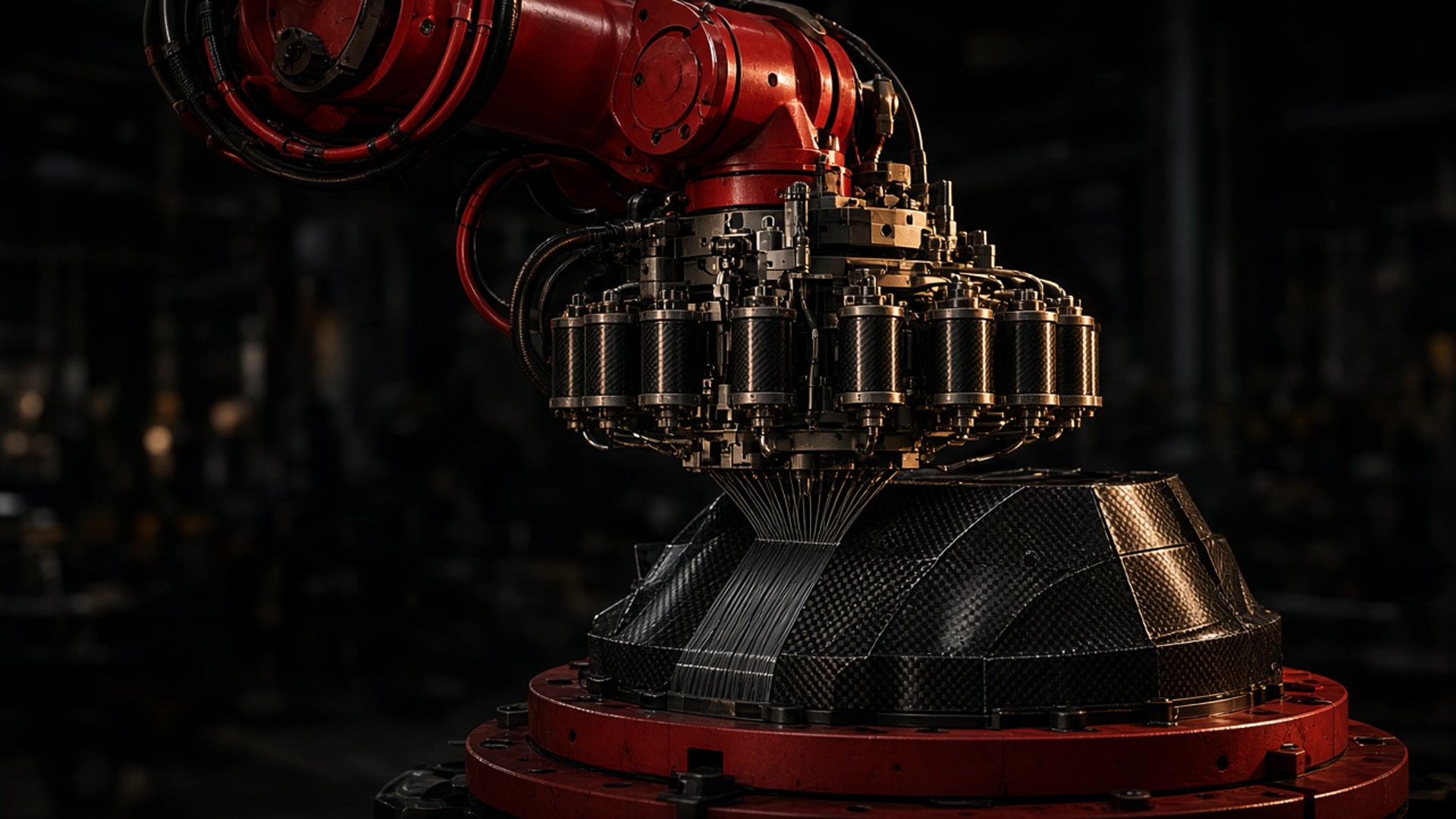
The cause sits in the factory. Inspections of a newly cured forward propellant dome on the first stage found voids, air pockets between carbon fiber layers, chief executive Peter Beck said, as Ars Technica reports. The stage is 7 meters wide, and Beck calls it the largest pressurized structure ever made of carbon composite. It is too big for an autoclave, so Rocket Lab had to develop out-of-autoclave processes and custom cure cycles for the domes.
The voids grew out of an earlier repair. In January a tank built by a third-party contractor with a manual hand-lay process ruptured during a hydrostatic test, a failure blamed on a defect at a critical join. Rocket Lab brought an automated fiber placement machine online, deleted joints and thickened some sections. "Those thicker sections are where the voids formed," Beck said. An aft dome made on the revised process has passed inspection, and a new forward dome is being built.
Funded, on Rocket Lab's balance sheet. Flown, no. Second source does not apply to a launcher still in development.
The lesson is about scale, not this one part. A process that works on a small composite rocket has to be relearned at seven meters, and every fix to strength changes how the material cures. Neutron's date now depends less on the launch pad than on whether the next dome comes out of the cure clean.
Policy & capital
CSG buys 9.5 percent of MDA Space
CSG, the Prague-based group best known for ammunition, artillery and Tatra trucks, said on Oct. 13 that it now holds 9.5 percent of MDA Space, making it the Canadian company's largest shareholder. It is CSG's first move into space beyond small venture bets. At the current share price the stake is worth about C$616 million, The Logic calculates; Bloomberg, in the Financial Post, puts it at US$434 million at Monday's New York close. CSG did not disclose terms.
MDA builds satellites, space robotics and components from Brampton, Ontario. What CSG wants from it is stated in conditional terms. Cooperation "could include co-investing in manufacturing or assembly facilities in Europe," partnering on acquisitions and introducing CSG's defence customers to MDA, CSG says. Reuters, via CNA, and Bloomberg both report the same list. Chairman Michal Strnad told Bloomberg that "building everything from scratch would take too long."
The capital is real and already settled. It buys no satellites. A shareholder, even the largest, does not place orders, and nothing in the announcement commits either company to a facility, a program or a customer. MDA chief executive Mike Greenley said a "global investor network is a strategic tool."
Funded, as equity, not as an order. Flown and second source do not apply: no hardware or requirement is attached.
What changes is who sits closest to MDA's next capital decision. A defence group with European ammunition plants and customers now has the biggest voice among MDA's owners. If a co-owned assembly site in Europe follows, the stake becomes industry. Until then it is a position.
Backlog
ClearSpace wins the UK's £61 million debris removal prime
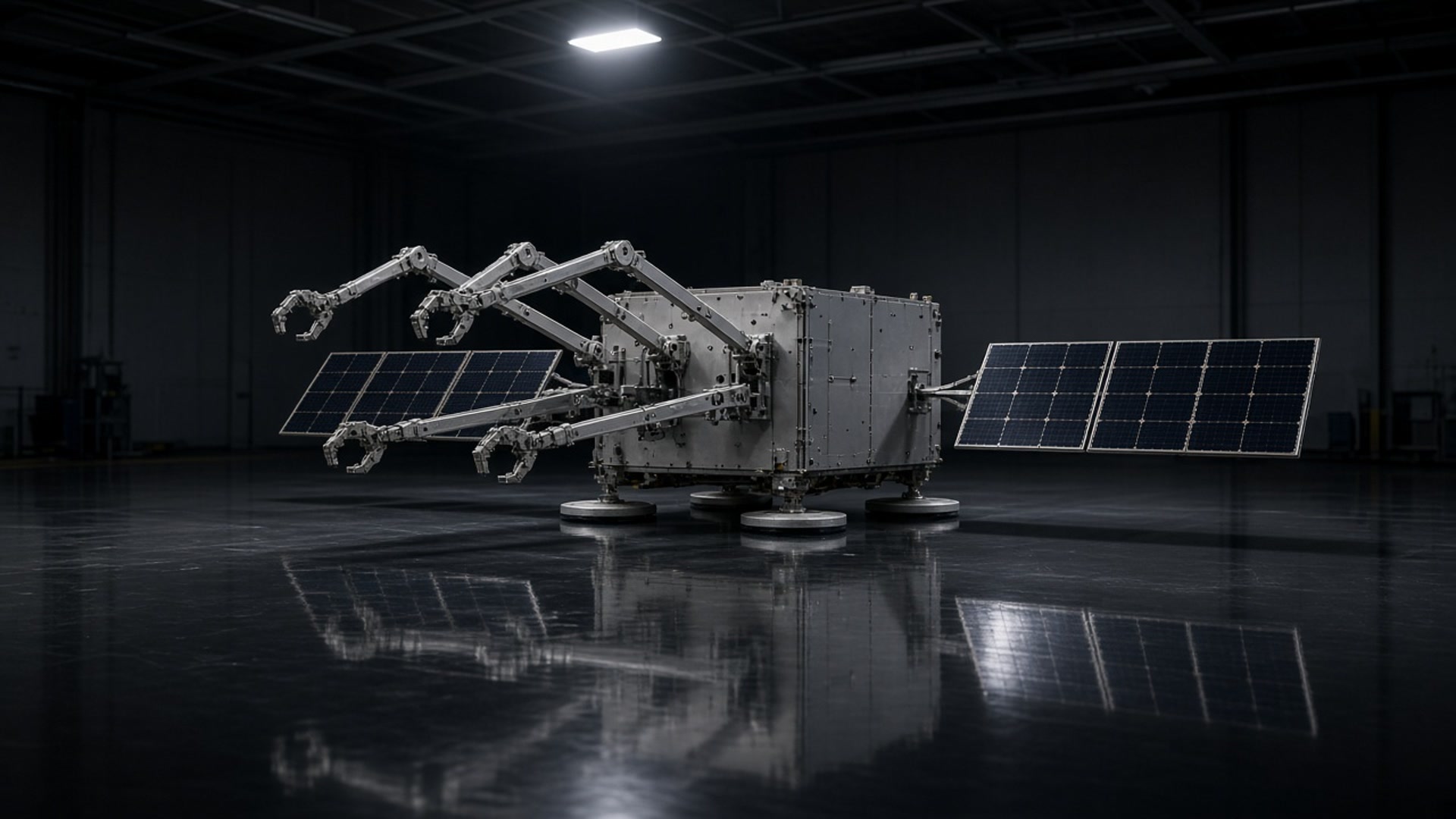
The UK Space Agency has hired ClearSpace as prime contractor for UK Active Debris Removal, a national mission to remove two defunct UK-registered satellites from low Earth orbit. ClearSpace puts the contract at £61 million; the government calls it "more than £60m." SatNews, reporting independently, also has £61 million.
The government is the customer here, not a grant maker. Under the contract the agency defines the requirement and oversees performance while ClearSpace designs, builds and operates the mission, the company says. GOV.UK calls it the first time a company has been asked to deliver a significant new national capability. The servicer is to be refuellable, so it can be used again after the first two removals.
The dates need care. GOV.UK says the spacecraft will launch in 2029 from SaxaVord Spaceport in Scotland and remove the two satellites "by 2032." ClearSpace says the mission is "targeted to begin active debris removal operations in 2029, subject to final mission and launch scheduling." Neither explains the three years between them, so this piece treats 2029 as ClearSpace's target and 2032 as the government's commitment.
Funded, under a signed national contract. Flown, no: the servicer is still to be designed and built. Second source, none: one prime holds the mission.
A paid service for a government customer is what removal companies have been asking for. ClearSpace now has to turn a design into a spacecraft in about three years and catch an object never built to be caught. If the 2029 start holds, the UK will have paid for two removals with one spacecraft.
In-space economy
Foothold 4 of 6: "One scrub can't erase it"
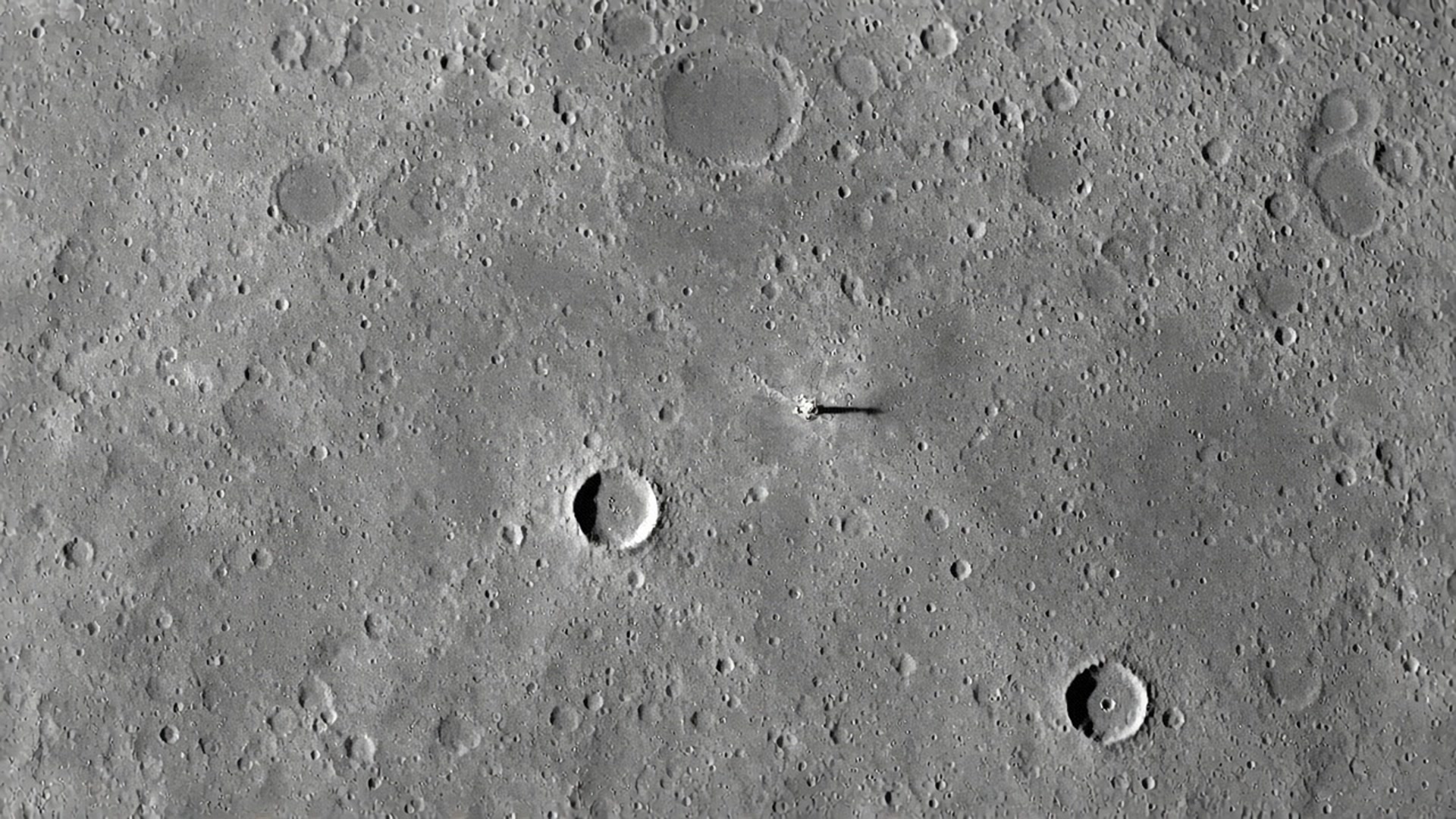
Foothold 3 ended on a condition: everything has to land on more than one lander, so one slip cannot take the night shift with it. That is a supply question. A second lander counts only if it is funded, built and proven on the surface, and the record so far is short.
Four commercial cargo landers have tried, from three providers. Astrobotic's Peregrine was lost on the way, in January 2024, and never attempted a landing. Intuitive Machines' Odysseus landed the next month, broke a leg and fell on its side. Firefly's Blue Ghost 1 touched down upright on March 2, 2025, and worked through its mission. Days later Intuitive Machines' Athena reached the south polar region and also came to rest on its side. One provider, one upright landing.
The lesson NASA drew is about repetition. Its June 30 Moon Base awards gave Astrobotic, now Voyager Lunar Systems, $297.9 million for two landings, Firefly $144.2 million and Intuitive Machines $148.3 million for one each, all for late 2028. NASA says each will fly an updated version of a design that has already flown, and asks each company to assess its previous lander and fold in what it learned. Firefly says build-to-print reuse lets it deliver in about two years, half the time of Mission 1.
The near-term line is crowded, which is the point. Griffin-1 has finished environmental testing at JPL and targets launch late this year. Blue Origin's Blue Moon MK1, Endurance, has cleared thermal vacuum testing and aims for early 2027. Intuitive Machines' third lander has moved into 2027. Firefly's second Blue Ghost, stacked on its Elytra orbiter, is being readied for the first American landing on the far side. Any one of them can slip without stopping the program, because the others keep building.
The 2028 missions also start to test what a base needs from many landings in one place: Firefly says its next Blue Ghost will set down near the first.
Crew is a separate lane. The two crewed landers covered in Foothold 2, SpaceX's and Blue Origin's, remain funded and unlanded. Cargo is where redundancy has to be earned first.
The score for small cargo: funded, yes, across three providers. Landed upright, once. Second source, on paper only, since a parallel supplier counts when it has landed, and two of the three have not landed upright. That is two boxes, one of them thin.
The decade is not booked either. NASA's follow-on contract, CLPS 2.0, is still unawarded; the agency's procurement page now lists Nov. 7 for award and start, after three schedule updates since mid-September.
The invoice: a second and third provider upright on the surface, CLPS 2.0 signed with more than one winner, and landers built to a repeated design rather than redesigned each time. Then the question changes from what can land to what stays and works after the lander leaves.
End of issue 010
If this was useful, the next one lands in a few days.