

The briefing · Vol. 08 · No. 001
18 August 2026 · Policy & capital · In-space economy · Connectivity · 12 min read
What the contracts are actually buying
SpaceX takes a sensing-and-launch stack. K2 and Rocket Lab convert demand into backlog. Interlune has helium-3 buyers. Direct-to-cell hits a carrier calendar. A spent Falcon stage leaves an 18-meter mark on the Moon.

What this issue is actually about
This week is still about what the checks purchase (a stack, a factory, a mixed backlog) and whether buyers showed up before the mines. Direct-to-cell is now a product roadmap. Cislunar traffic left a crater we could measure.
Contracts
SpaceX locks in a multi-billion-dollar sensing and launch stack
SpaceX has secured more than $8 billion in related U.S. Space Force awards this year for sensing satellites, a military data network, and the rockets to put them on orbit.
The largest single piece is a $4.16 billion agreement to develop the initial Space-Based Airborne Moving Target Indicator constellation: satellites designed to detect and track airborne objects from low Earth orbit. A second award, valued at $2.29 billion, covers the Space Data Network Backbone, a proliferated LEO mesh intended to move targeting and sensor data between platforms in near real time. In late July the company received two additional task orders worth $1.6 billion for 18 Falcon 9 launches from Vandenberg Space Force Base through the end of 2027 to deploy elements of the sensing and targeting portfolio.
Taken together, the awards place a single private company across multiple layers of a major national architecture: the sensors, the data transport layer, and the launch cadence required to field them on an accelerated schedule. One of the launch packages moved from requirement identification to award in roughly two months.
The work sits inside the broader push for layered missile-warning and tracking capability, but the industrial signal is broader. SpaceX is being paid to manufacture, integrate, and launch at volume under compressed timelines. Primes can still design an architecture. Fewer shops can build the buses, fly the mesh, and hold an 18-mission cadence out of Vandenberg on the same invoice.
That combination of vertical integration and production rate is what the contracts are actually buying.
Read the stack, not the press release. Sensing without a data network is a collection of pictures. A network without launch is a drawing. Launch without the other two is a ride. The government is paying one company to close all three on a clock it could not get from the last generation of suppliers. That is the product.
Capital
K2 Space raises $500 million at a $6.8 billion valuation
K2 Space closed a $500 million Series D in late July that values the Torrance, California satellite manufacturer at $6.8 billion, more than double its previous round.
The financing was led by Kleiner Perkins and ICONIQ, with participation from CapitalG, Lightspeed, Altimeter and others. The company now reports more than $1 billion raised to date and more than $1 billion in signed commercial and government contracts. Those contracts include an initial tranche of 30 satellite buses for SES’s meoSphere network, work with Anduril on space-based interceptor platforms, and a recent Space Force award for Enterprise Space Terminals.
K2’s bet is straightforward: larger, higher-power satellites produced at industrial scale. Co-founder and CEO Karan Kunjur has said the capital will support a path toward building up to 100 large satellites per year. The company has already positioned manufacturing, supply chain, and facilities for that volume.
In a market still dominated by smaller buses and slower production cycles, K2 is trying to industrialize the high-power end of the satellite business. High-power is the constraint for direct-to-device, dense Earth observation, and the interceptor-class payloads now showing up in government requirements. Those missions do not fit on a cubesat line. They also do not wait five years for a hand-built bus.
The new capital and the contract backlog give a measurable read on whether that thesis is finding customers. Valuation is a claim. A billion dollars of signed work is a queue. The next read is whether Torrance can turn that queue into buses at the rate Kunjur has described, and whether the customers who signed keep signing when the factory is the product.
Industrial mix
Rocket Lab keeps adding spacecraft and test work

Rocket Lab continues to convert national-security and commercial demand into concrete backlog. In July the company received a $266 million Space Force contract for up to 18 suborbital missions on its HASTE vehicle, the largest launch agreement in its history. Most of the flights are planned from a new pad at Alaska’s Pacific Spaceport Complex and support hypersonic and missile-defense testing.
Separately, Rocket Lab was awarded approximately $397 million to deliver Flatellites under the Space Force’s airborne moving-target sensing program. The company also has delivery orders inside the Space Data Network consortium and a small GEO bus for Viasat’s protected tactical satcom work. It has been added to larger Space Force test-and-training contract vehicles and continues to book commercial satellite manufacturing and launch work. Reported backlog has climbed past $2.3 billion.
The pattern is consistent. Rocket Lab is winning responsive launch on Electron and HASTE, spacecraft production across LEO and GEO, and test support, while Neutron is prepared for higher-capacity missions. That is not a company waiting on a single vehicle to become real. It is a shop selling mix: cadence, buses, and range time under one roof.
That combination is what both government and commercial customers are currently paying for.
The dollar figures matter less than the mix. Launch cadence, satellite buses, and test under the same roof is how a company of Rocket Lab’s size keeps capturing work that once flowed mainly to larger primes or to SpaceX. HASTE from Alaska is not a branding exercise. It is a pad, a vehicle, and a test customer with a calendar. Flatellites and a GEO bus are the same thesis on the spacecraft side: build what the requirement actually is, at a rate a prime would still treat as a program.
Resources
Interlune’s helium-3 path gets buyers and flight hardware
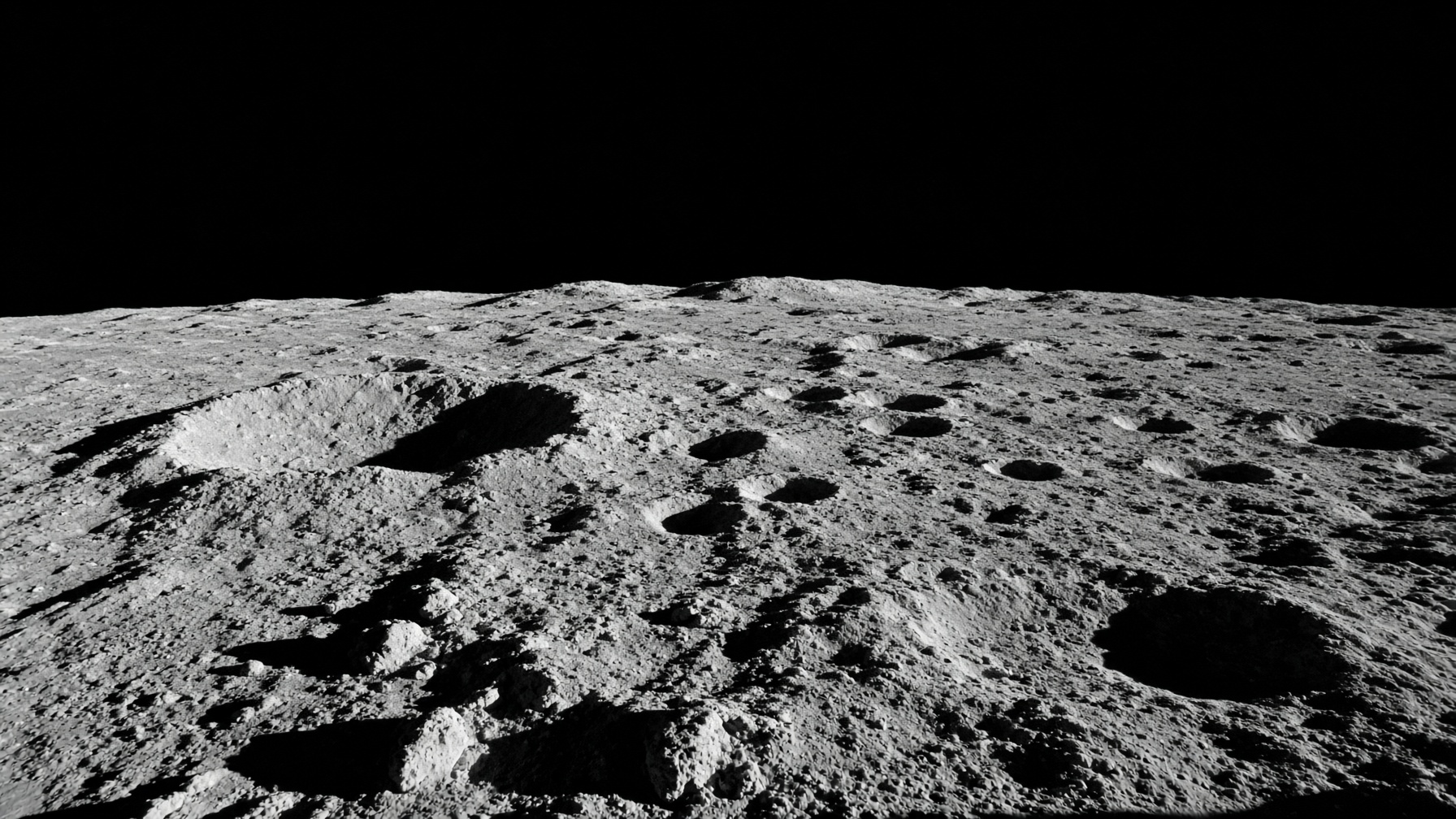
Interlune now has both funded flight hardware and real offtake agreements. NASA awarded $6.9 million for the Prospect Moon payload to demonstrate helium-3 and volatile extraction on a 2028 lander. At the same time the company has commercial supply deals, including with Bluefors for quantum cryogenics and a Department of Energy purchase commitment.
That pairing is the story. Most lunar-resource pitches still live on slides. Interlune has a flight path with a year on it, and buyers who have already signed. The DOE commitment and the Bluefors offtake are not a market. They are proof that someone with a use for the isotope is willing to write a check before a tonne has been moved.
Concentrations in lunar regolith are measured in parts per billion. Any real operation will move enormous volumes of material for a small return of gas. That is the industrial fact underneath the offtake headlines. The 2028 payload is a demonstration of extraction, not a mine. If it works, the next problem is not a better payload. It is whether the mass, power, and surface operations required to work at those concentrations can be made cheap enough to matter.
The helium-3 thesis is often sold as fusion fuel. The near-term buyers are not fusion plants. They are quantum and cryogenic users who already pay for the isotope on Earth, and a government that wants a domestic path. Fusion, if it ever wants lunar helium-3, will need a production system that already works for someone else. Offtake now is how you find out whether that system is worth building.
This is still a demonstration phase. It is also one of the few efforts with both a flight path and actual buyers. In an early resource market, that combination is the scarce asset.
Prospecting
AstroForge prepares another asteroid rendezvous attempt
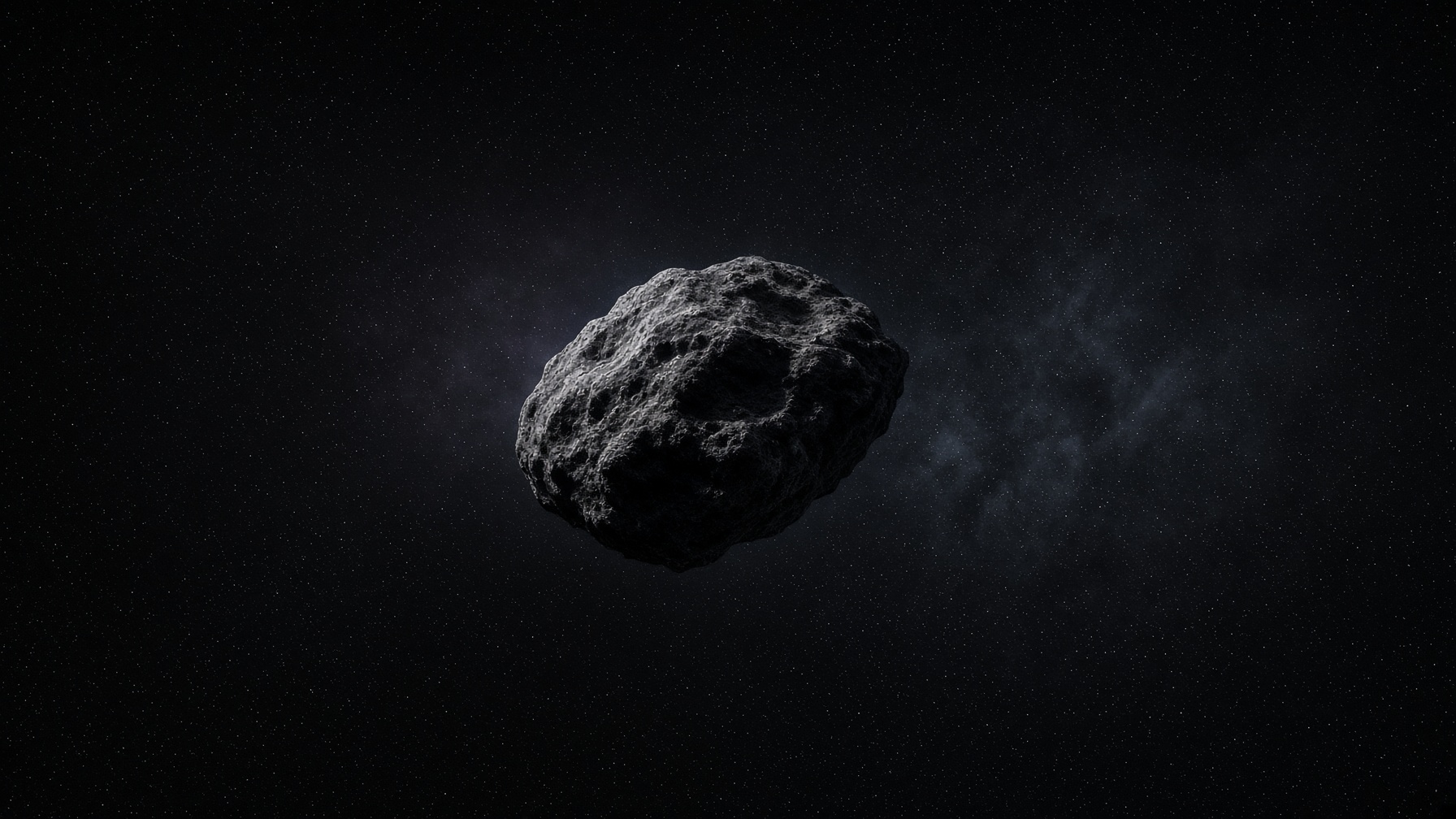
AstroForge is aiming for a late-2026 DeepSpace-2 launch, intended as the first commercial spacecraft to rendezvous with an asteroid after the earlier Odin communications failure. The focus remains platinum-group metals, but the real near-term test is simpler: can a commercial team navigate to a small body, characterize it, and operate in deep space.
Odin did not fail as a mining mission. It failed as a communications and operations problem on the way to a target. That is the actual sequence. You do not get to extraction economics if you cannot talk to the vehicle, hold a trajectory, and sit on a body you have only seen in a catalog. DeepSpace-2 is a second attempt at that step, not a skip to a refinery.
Platinum-group metals are the pitch because the value density, on paper, can survive the cost of getting there. Paper is not a mine. Grade, accessibility, and whether a small irregular body can be worked at all are still unknown. The only way to collapse that uncertainty is to arrive, look, and measure. Prospecting still has to come before any serious extraction economics.
This mission is one of the few private attempts at that step. The industrial read is not “asteroid mining is here.” It is whether a commercial team can do deep-space proximity operations without a national lab wrapped around the flight. If DeepSpace-2 works, the scarce skill is navigation and characterization, not a bucket. If it does not, the constraint was never the metal.
Constraint
Prospecting before mining

The binding constraint on early space resources is not extraction hardware. It is knowing what is worth the cost of landing. A NASA-funded effort is testing whether Raman spectroscopy can identify water and minerals from tens of kilometers during flybys. Interlune’s 2028 demo and AstroForge’s planned rendezvous sit in the same phase.
Bulk mining is still distant. Reducing the cost of being wrong about composition and location is the work that has to happen first. A lander sent to the wrong patch of regolith, or a rendezvous with a body that does not hold the metals in the catalog, is not a learning experience. It is a spent vehicle and a spent round.
Remote sensing from flyby distances is how you shrink that error before you commit descent mass. Raman spectroscopy is one bet on that: identify water and mineral signatures without touching the surface. It will not replace a sample. It can keep you from paying for a landing you should not have bought.
Interlune and AstroForge are often filed under “space mining.” They are not mines. They are attempts to make composition and location cheap enough to act on. The hardware that moves dirt is not the scarce piece. The scarce piece is a map you can trust at a cost that does not require a government to eat the miss.
Until that map exists, capital will keep showing up for offtake announcements and stay short of production. That is rational. The work in this phase is prospecting. Treat it as such.
Connectivity
Starlink direct-to-cell keeps expanding

NTT Docomo expanded its Starlink agreement to use next-generation Mobile V2 satellites for voice and higher-speed data in Japan starting around 2028. Direct-to-device is moving from demonstration into carrier product roadmaps with defined timelines.
That is the consumer-facing side of the same industrial build-out visible in launch and satellite manufacturing. Messaging-only demos were a proof. A carrier putting voice and higher-speed data on a 2028 calendar is a product plan. Docomo is not buying a stunt. It is buying a satellite generation, a feature set, and a date it can put in front of subscribers.
The relevant numbers are now subscriber figures, feature commitments, and capital going into the next satellite generation. Direct-to-cell only works at scale if the constellation has the power, the spectrum arrangement, and the replacement cadence to hold a phone-grade service. Mobile V2 is that bet: more capable satellites, aimed at a phone, sold through a carrier rather than as a novelty layer on top of one.
Watch the carrier calendars, not the launch montages. If 2028 slips, the story is manufacturing and spectrum, not marketing. If it holds, direct-to-device stops being a demonstration category and becomes a line item in a mobile plan: the same industrial stack, sold at the other end of the market.
Cislunar
A spent Falcon 9 stage hits the Moon

On 5 August 2026 a spent Falcon 9 upper stage from a 2025 CLPS mission impacted the Moon near Einstein Crater. Lunar Reconnaissance Orbiter later imaged the roughly 18-meter crater. The impact had been predicted months earlier.
Tracking discarded hardware on lunar-crossing orbits is now accurate enough to be routine. This is not a crisis. It is a data point: cislunar traffic is already dense enough to leave measurable surface marks, and the observational systems exist to record them.
CLPS sent a lander. The upper stage that put it on the way kept going. Stages on lunar-crossing trajectories have been doing this for years; what changed is that the prediction, the impact, and the image now sit in the same workflow. LRO did not discover a mystery hole. It confirmed a forecast.
Treat that as infrastructure, not spectacle. If you can predict an 18-meter mark months out, you can also plan around it. Traffic in cislunar space is no longer hypothetical. Hardware already in the system is leaving a record, and the record is being kept. The industrial implication is boring and useful: disposal, tracking, and the catalog are becoming operational problems rather than academic ones.
No one needed a press conference. The crater is the receipt.
End of issue 001
If this was useful, the next one lands Monday.