

The briefing · Vol. 18 · No. 018
17 November 2026 · In-space economy · Policy & capital · 7 min read
The Ship Catch
SpaceX catches a Starship upper stage at the Starbase tower for the first time, though the Flight 15 booster did not return. Intuitive Machines posts a record $269.3 million quarter, mostly from its Lanteris purchase, while York Space takes a $749.7 million non-cash charge and Serco, Reflect Orbital and Gama announce a deal and two raises.
What this issue is actually about
SpaceX caught a Starship upper stage from Flight 15 at the Starbase tower on Nov. 14, the first time the company has recovered a ship from orbit. The Super Heavy booster on that flight did not return to the pad. Intuitive Machines now books most of its quarterly revenue from satellite production, largely through the Lanteris business it acquired in January. It reported record third-quarter revenue of $269.3 million, a $1.9 billion backlog and full-year guidance of $920 million to $950 million. A $30.0 million warrant gain narrowed the net loss, and gross margin includes approximately $19 million of one-time items. York Space recorded a $749.7 million non-cash goodwill impairment, citing difficulty estimating contract awards beyond 2026, and announced a proposed acquisition of Outlook Industries. Serco has agreed to acquire QinetiQ's U.S. business for $292 million cash, with close expected in the first quarter of 2027. Reflect Orbital raised $73.5 million toward a 2027 demonstration, a plan the American Astronomical Society has opposed at the FCC. Gama raised €15 million for a solar-array production line near Paris.
in-space
SpaceX catches a Starship upper stage at Starbase for the first time
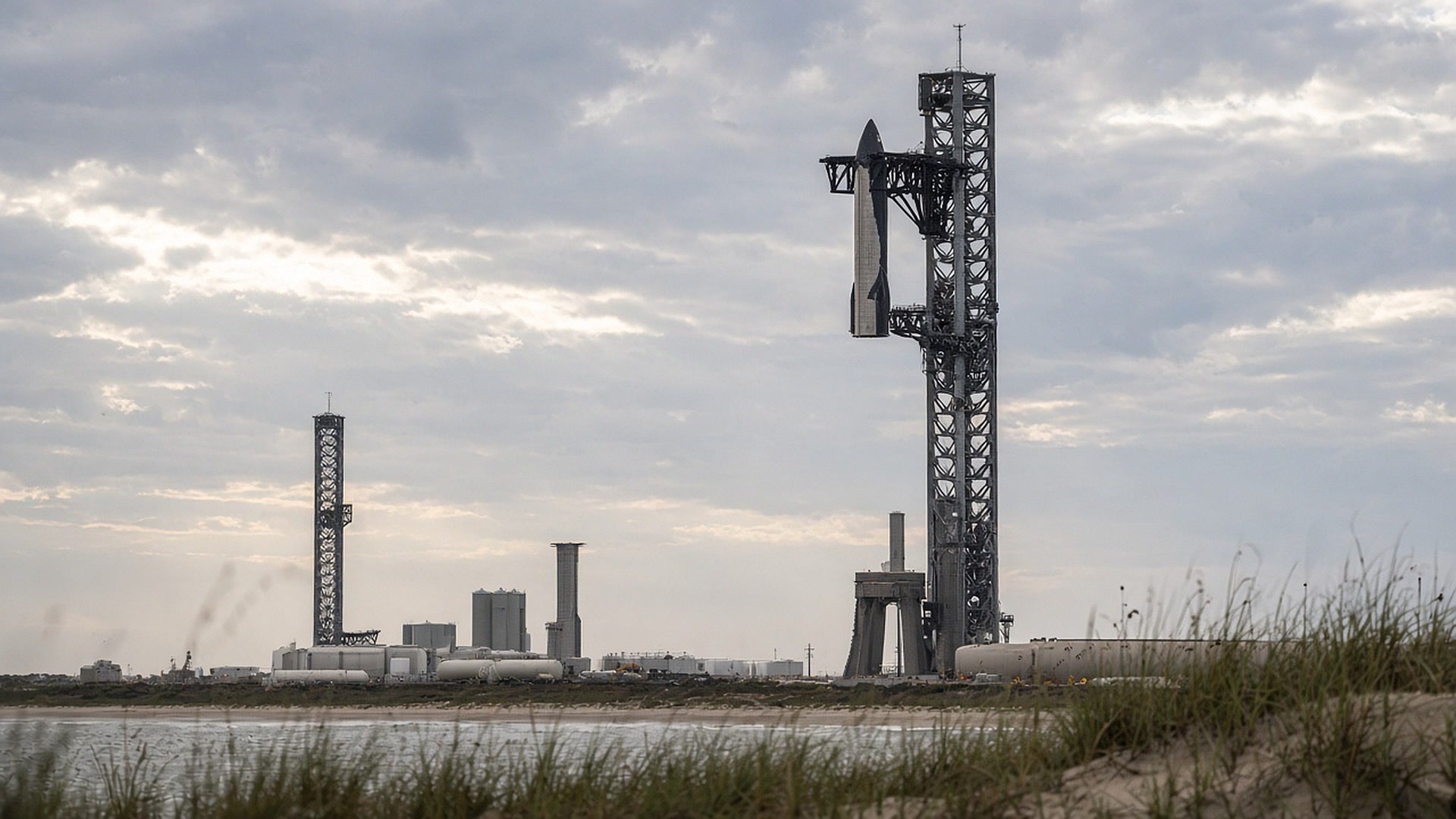
SpaceX caught a Starship upper stage at its Starbase, Texas, launch tower on Nov. 14, the first recovery of a ship from orbit. Ship 42 flew as the upper stage on Flight 15, which lifted off from Pad 2 at 4:47 p.m. CT on Nov. 13, Spaceflight Now reports. At 3:20 p.m. CT the next day, the tower's mechanical arms caught the ship after a landing burn, according to Spaceflight Now and Space.com. SpaceX describes the same catch sequence.
SpaceX's Nov. 14 post said Starship "returned to Starbase." That refers to the ship catch, not the booster. The Super Heavy booster, Booster 22, a Version 3 vehicle, was supposed to be caught about six and a half minutes after liftoff. SpaceX says the boostback burn ended early after a low fuel mass alarm, a cause still under investigation, and that guidance then aborted the catch and sent the booster offshore. After a landing burn over the Gulf of Mexico, the flight termination system was triggered. Spaceflight Now and Ars Technica report it exploded before hitting the water. The company has previously caught Super Heavy boosters, those outlets say, but not a Version 3 booster and never a ship.
After reaching orbit, the ship deployed 26 Starlink V3 satellites. SpaceX says it made contact with every satellite, which have begun raising their orbits.
Ars Technica calls the catch a proof of concept for getting the upper stage back to the tower. This flight did not recover both stages.
SpaceX is developing a Starship human landing system, and cargo versions of the lander, under NASA contracts. NASA said in October it had revised those contracts and has not assigned SpaceX a specific Artemis landing mission. Flight 15 was not that lander demonstration.
in-space
Intuitive Machines posts record $269.3M revenue, mostly from Lanteris
Intuitive Machines reported record third-quarter results on Nov. 12, with revenue of $269.3 million, up from $52.4 million a year earlier. Product revenue, a line the company did not have a year ago, was $215.1 million. The 10-Q shows that Lanteris, the spacecraft manufacturer Intuitive Machines acquired on Jan. 13, contributed $215.1 million, equal to the quarter's product revenue. Nearly all of the year-over-year increase came from the acquisition.
Gross profit was $69 million, or 26% of revenue, which the company says was driven by satellite production, higher volume and net favorable one-time program adjustments of approximately $19 million. The company still posted an operating loss of $34.2 million. A $30.0 million gain from a change in the fair value of warrant liabilities helped cut the net loss to $3.4 million. Adjusted EBITDA was a positive $8.3 million. Cash from operations was $66.2 million, and capital expenditures were $32.7 million, which the company presents as $33.5 million of free cash flow. Free cash flow for the first nine months remained negative at $112.3 million.
Contracted backlog ended the quarter at $1.867 billion, which the company describes as a record $1.9 billion, compared with $213 million at the end of 2025. That total includes backlog acquired with Lanteris and with Goonhilly Earth Station. In the quarter the company booked $450 million of new awards and acquired Goonhilly backlog, led by the AMDT3 constellation, NASA's Jet Propulsion Laboratory EAGLE-VSWIR mission, and Hartford, two IM 300 platforms for a national security space customer. Intuitive Machines was also named a vendor on NASA's Commercial Lunar Payload Services 2 contract.
The company guided full-year 2026 revenue to $920 million to $950 million and said it is maintaining guidance for positive adjusted EBITDA. That outlook is guidance, not a result.
in-space
York Space records a $749.7M non-cash goodwill charge and announces a proposed Outlook deal
York Space Systems reported third-quarter results on Nov. 12. Revenue was $84.2 million, down 7% from a year earlier. Gross margin was 18%, down from 22%. The net loss was $807.4 million, and adjusted EBITDA was a loss of $27.6 million.
Almost all of that net loss came from a $749.7 million non-cash goodwill impairment. York said it recorded the charge "as a result of the difficulty in estimating with sufficient certainty the timing and amount of future contract awards beyond 2026." The 10-Q ties that uncertainty to a shift toward indefinite-delivery contracts. The charge is an accounting write-down, not cash spent in the quarter. Cash and cash equivalents were $308.9 million at Sept. 30.
Backlog stood at $581.0 million, down slightly in the third quarter, after $17 million of new wins and modifications and $44 million from subsidiaries. York's chief executive said the identified pipeline grew more than 30% from the prior quarter. The company narrowed full-year 2026 revenue guidance to $380 million to $400 million and cited a two-year government pipeline of $14.9 billion, up $3 billion from June 30, limited to opportunities at customers it has spoken to directly. Those are outlook figures, not booked work.
The same day, York announced a proposed acquisition of Australia's Outlook Industries to form York Terrestrial Systems. Terms were not disclosed. Via Satellite, citing the company, reports the deal was not material enough to require an 8-K and that Outlook has fewer than 20 employees. It has not closed and requires regulatory approvals, including from Australia. York plans to build Shadow, the new unit's first unmanned ground vehicle, in the United States. The company estimates a $3.08 billion unmanned ground market and a $10.31 billion unmanned maritime market.
policy
Serco agrees to buy QinetiQ's U.S. business for $292M cash
Serco Inc., the North American subsidiary of Serco Group, has agreed to acquire QinetiQ Inc., QinetiQ's U.S. business, for $292 million in cash, on a cash-free, debt-free basis. Both companies announced the agreement on Nov. 12. The deal has not closed. Completion is expected in the first quarter of 2027, subject to U.S. antitrust and foreign-investment clearances and approvals related to classified work.
QinetiQ said the U.S. unit generated $172 million of revenue and $13 million of underlying operating profit in the six months ended Sept. 30, and that the group's fiscal 2027 guidance assumes about $385 million of revenue at about a 7% margin for that business. The seller is booking a non-cash impairment of about £175 million and plans to return £200 million of proceeds to shareholders through additional buybacks after completion.
Serco's reason for the purchase, its U.S. chief executive said, includes space as well as naval and other defense work. "One of the most exciting synergies will be the joining of our space portfolios," Barbara Supplee said. "Space is the fast-moving domain of the future, and we want to be there in a significant way." QinetiQ US work includes support to the Space Development Agency's Proliferated Warfighter Space Architecture. Washington Technology reports that QinetiQ US holds a five-year, $224 million systems engineering and technical assistance contract on that architecture, awarded in 2023, and quotes Supplee describing the work as helping the government define needs, support acquisition, integrate systems from multiple suppliers and operate the constellation as one.
Serco Inc. said the addition would make it a nearly $2.5 billion organization. The company expects the acquired business to contribute $370 million of revenue and $21 million of operating profit in 2027. Those figures are Serco's projections. QinetiQ US has about 800 employees.
policy
Reflect Orbital raises $73.5M as astronomers object to its licensed mirror demo
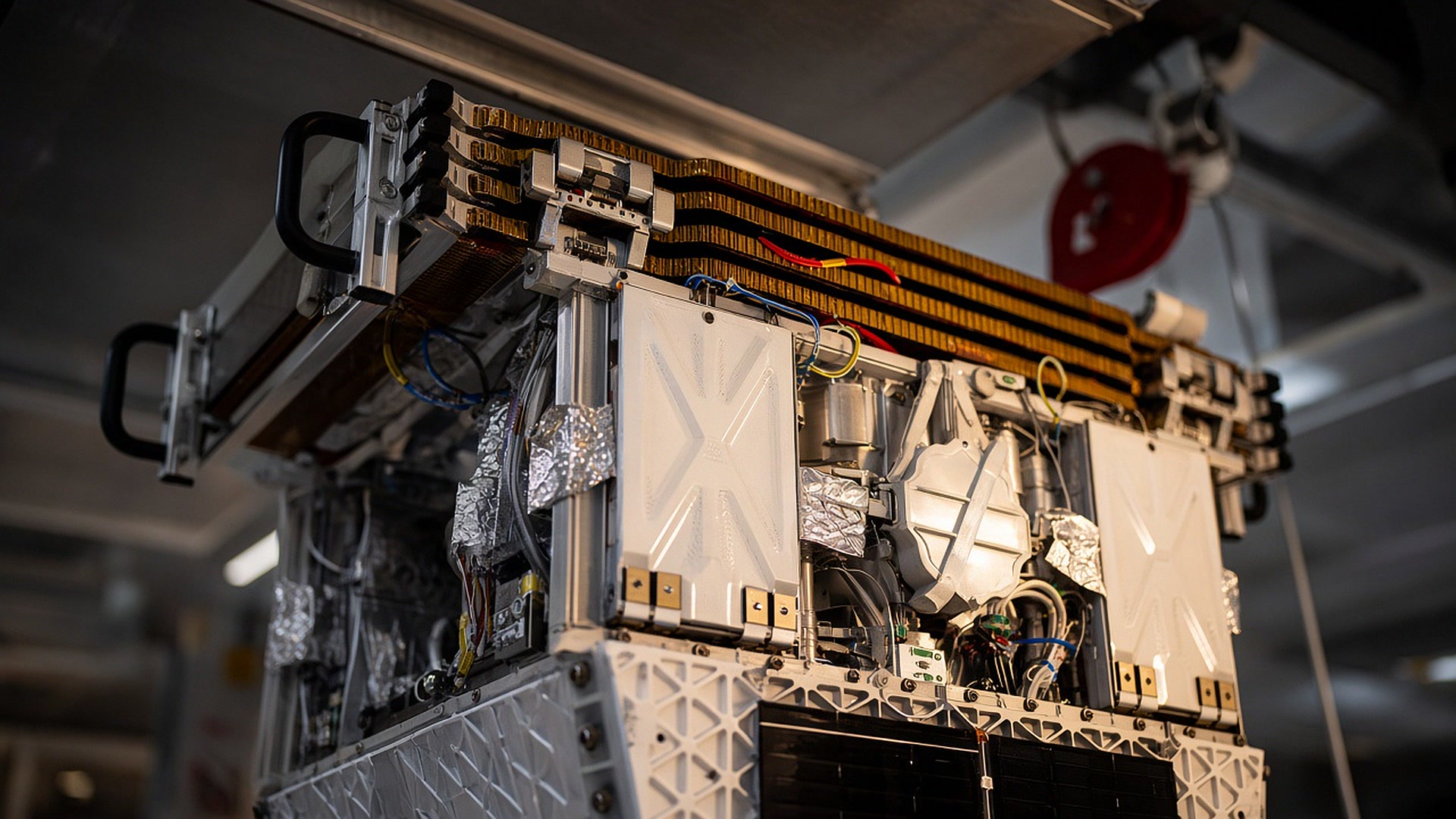
Reflect Orbital, a Hawthorne, California, company developing satellites that would redirect sunlight to Earth, announced $73.5 million in new funding on Nov. 10, taking its total raised to more than $100 million. The company did not label the round. Investors included Sequoia Capital, Lux Capital, Buckley Ventures, Convective Capital, The Uncommon Group and Salesforce Ventures. The company says the money will support initial satellite launches, reflector development and commercial partnerships in energy and lighting.
Reflect Orbital says an inaugural demonstration mission, approved by the Federal Communications Commission, is targeted for the second quarter of 2027. It has also filed an FCC application for a developmental satellite, which remains subject to regulatory approval. No Reflect satellite is in orbit. The company describes a production cadence of one large reflector quadrant every 3.5 days, a four-boom deployable structure every week and a 12,000-part satellite every two months. Those rates are the company's account.
The licensed demonstration has drawn objections. The American Astronomical Society petitioned the FCC in March to deny the application for the Earendil-1 prototype, arguing that a satellite designed to light the night sky would harm optical astronomy. The commission granted a license for the single experimental satellite on July 9. In a July 13 statement, the society said it was dismayed by the decision and warned about a constellation of 50,000 solar reflectors of the kind envisioned by the company. Reflect's website lists a roadmap of 50,000-plus satellites by 2035. That is a company plan, not a licensed constellation. WIRED reports that the FCC found astronomy concerns outside the scope of this license review and said any future multi-satellite deployment would need new approvals.
in-space
Gama raises €15M for a solar-array production line near Paris
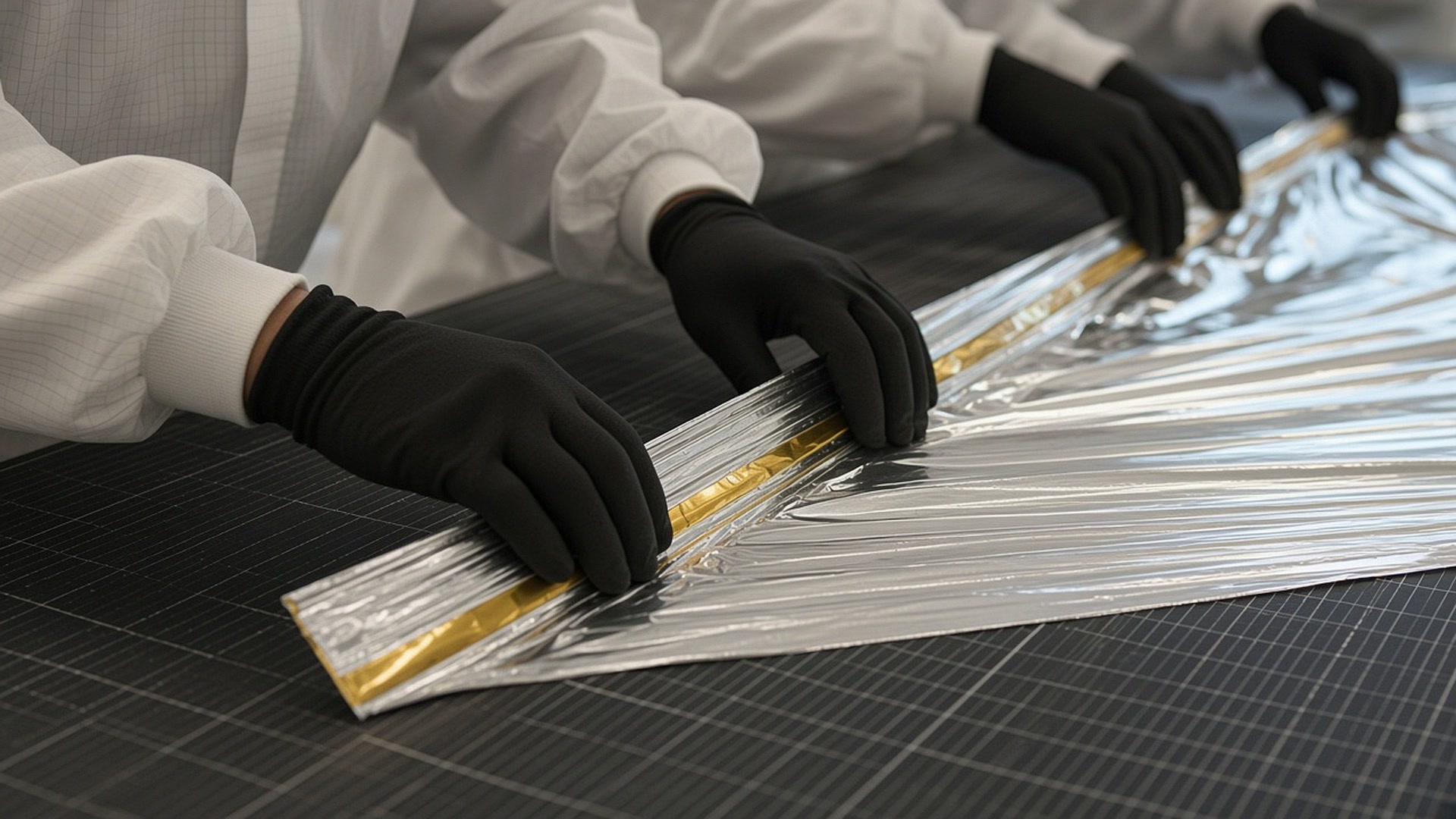
Gama, a French company building deployable solar arrays for satellites, raised €15 million in seed funding, announced on Nov. 12, from Transition, Planet A, Draper Associates and Manta Ray. The company will use the money to build its first production line for Wing, its deployable array, at Ivry-sur-Seine, just outside Paris, and to expand functional and environmental testing. Gama describes Wing as a complete power system, with solar generation, sun-tracking rotation, power management and optional energy storage. The Next Web reports the round will also fund about 60 engineering hires, tripling a 30-person team.
Gama says Wing uses high-volume terrestrial silicon solar cells adapted for space, in place of specialized III-V cells that the company says often come with lead times of a year or more. It targets six-month lead times once the line is running, and describes an aim of industry-leading cost per watt. That cost claim is the company's. Wing has not flown. Gama says it will deliver a first demonstration unit in the summer of 2027, under a September 2026 customer partnership with Eclipse Space.
The company started as a solar-sail venture. Its Gama Alpha demonstrator flew in 2023 with support from the French space agency, CNES. The new production line is not yet built.
In a related European hardware raise, Italy's Revolv Space on Nov. 11 closed a €5 million Series A, about $5.6 million, led by Deep Ocean Capital, Via Satellite reports, with about two-thirds of the money going to industrialize motion products. Revolv says it has delivered more than 83 units, with 27 in orbit.
End of issue 018
If this was useful, the next one lands in a few days.